Your Cart (0)
Your cart is empty
Free express shipping

Drawer menu
Free express shipping

Finding the right material to capture authentic elegance in European luxury design can feel surprisingly complex. Marble’s distinctive crystalline texture and naturally random veining create surfaces that reflect both light and imagination, making each installation a visual statement. This article brings clarity to marble’s true nature, debunking common misconceptions and highlighting essential insights for designers seeking premium decor that defines sophistication in high-end residential and commercial spaces.
| Point | Details |
|---|---|
| Marble’s Unique Properties | Composed mainly of calcite or dolomite, marble showcases unique veining and color variations, offering aesthetic versatility. |
| Maintenance Care | Proper sealing and care make maintaining marble manageable, countering common misconceptions of fragility. |
| Design Applications | Ideal for various luxury applications, marble enhances interiors, from floors to countertops, creating sophisticated environments. |
| Alternatives and Considerations | Designers should evaluate other stone options for specific uses and consider performance characteristics to avoid common mistakes. |
Marble represents far more than a simple decorative material - it’s a geological marvel transforming interior spaces with unparalleled elegance. Metamorphic rock formation creates this stunning stone through intense heat and pressure, resulting in unique crystalline textures that capture light and imagination.
Understanding marble requires dispelling common misconceptions about its properties and maintenance. While many assume marble is fragile or impossibly high-maintenance, the reality is more nuanced. Natural stone characteristics make marble surprisingly adaptable when properly cared for.
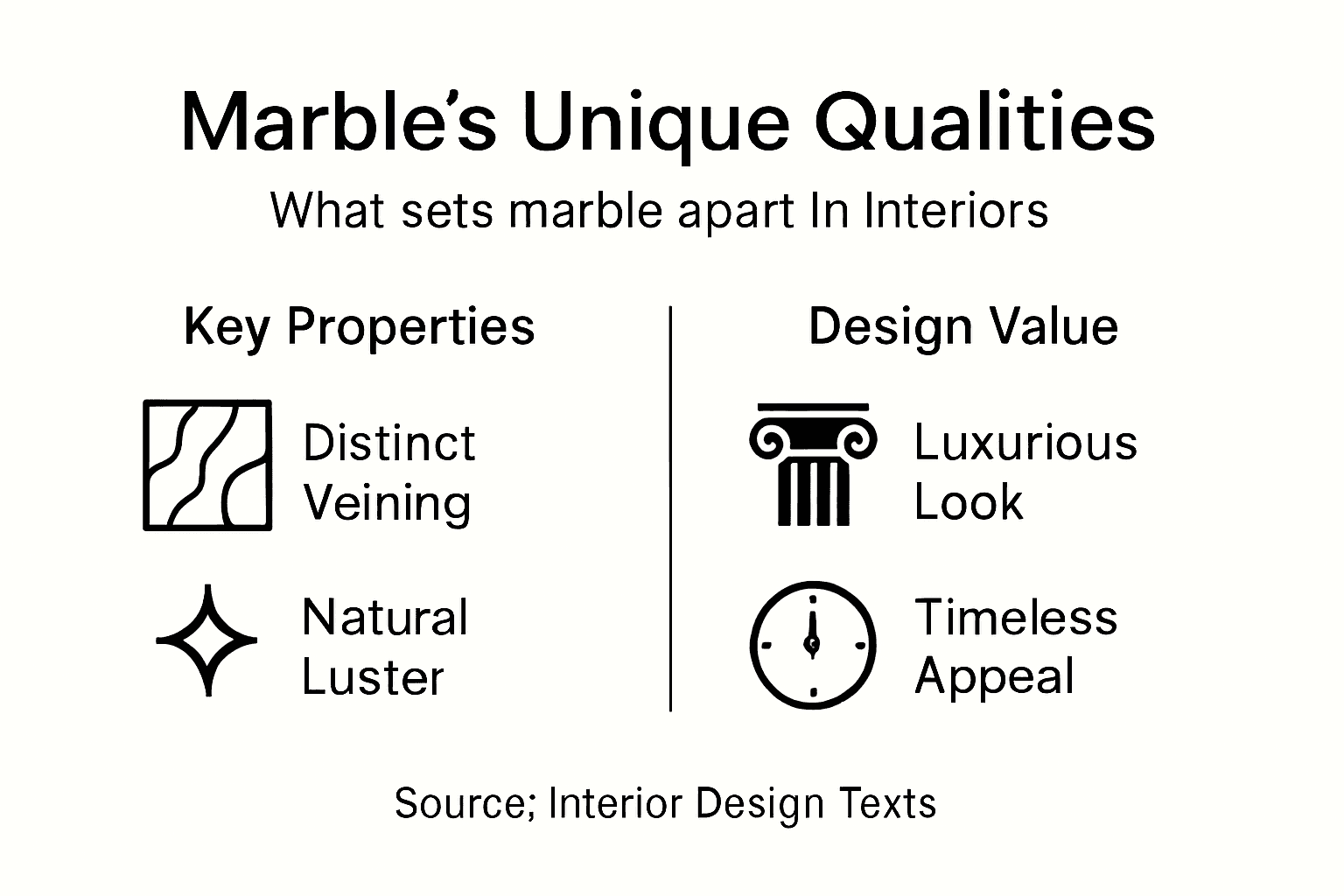
Key aspects of marble that interior designers and homeowners should recognize include:
The geological complexity of marble means each slab tells a unique story. Marble’s engineering characteristics demonstrate its versatility across floors, walls, and decorative elements, challenging preconceived notions about stone fragility.
Maintenance Insights
Contrary to popular belief, marble can be relatively straightforward to maintain with proper sealing and regular care. Understanding its vulnerabilities - such as sensitivity to acidic substances - allows homeowners to protect their investment effectively.
Pro tip: Always test cleaning products on a small, inconspicuous marble area first to prevent potential damage or discoloration.
Marble represents a fascinating geological canvas with remarkable diversity, reflecting intricate mineral compositions and unique formation processes. Marble classifications reveal complex variations that dramatically influence their aesthetic and functional characteristics for interior design applications.
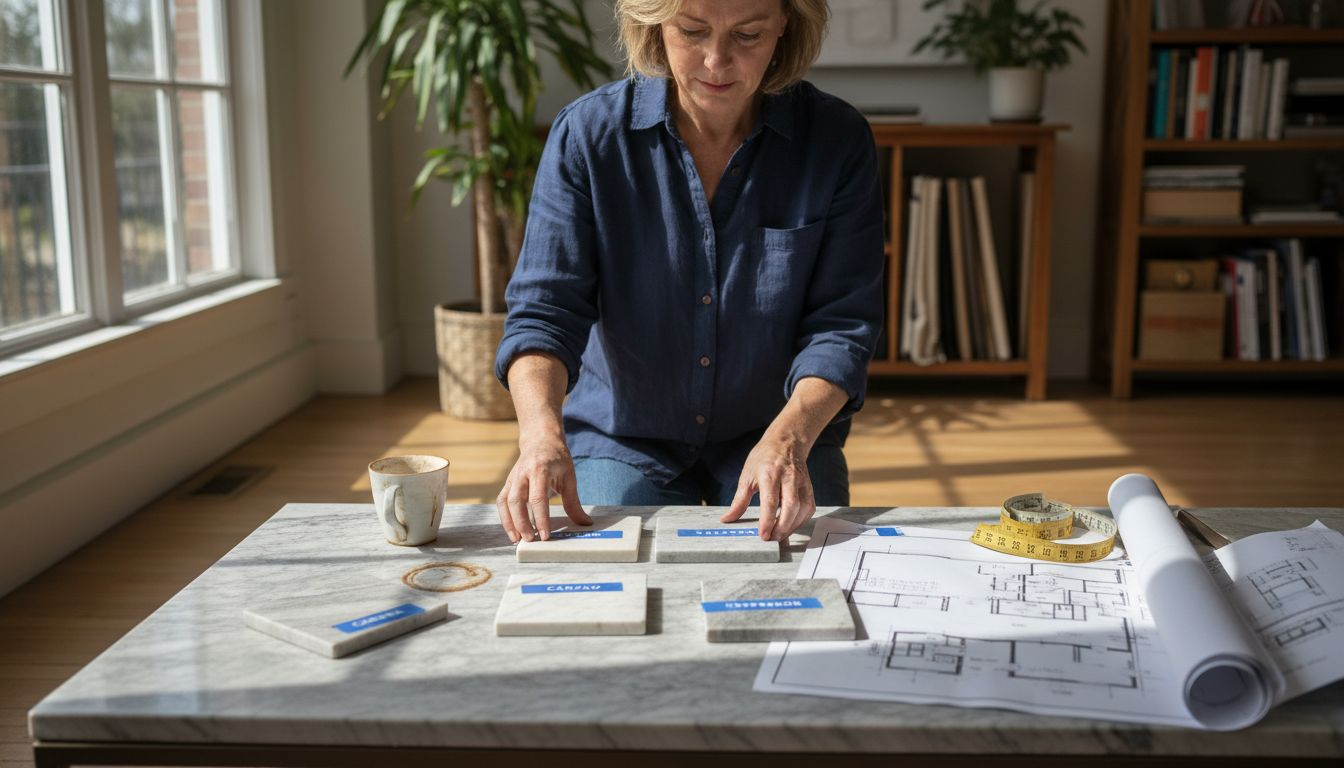
The primary marble types emerge from two fundamental mineral foundations: calcite and dolomite. Calcite marbles dominate the market, characterized by their luminous appearance and softer mineral structure. Dolomitic marbles, while less common, offer enhanced durability and greater resistance to environmental stressors.
Key marble varieties include:
Mineral composition variations significantly impact each marble’s performance, determining its suitability for specific interior applications. The intricate interplay of impurities creates unique color patterns and structural characteristics that make each marble slab a singular masterpiece.
Here’s a summary of what sets popular marble types apart:
| Marble Type | Color & Veining | Durability | Common Use Cases |
|---|---|---|---|
| Carrara | Soft white, subtle gray | Moderate | Bathrooms, floors |
| Calacatta | Bright white, bold veins | Moderate | Feature walls, kitchens |
| Statuario | Pure white, gold/gray | Moderate | Sculptures, vanities |
| Emperador | Rich brown, intricate | Good | Fireplaces, furniture |
| Nero Marquina | Deep black, white veins | Good | Accent walls, flooring |
Physical Characteristics
Marble’s physical properties extend beyond visual appeal. Grain size, crystal interlocking, and mineral impurities determine critical attributes like polishability, durability, and overall performance in residential and commercial settings.
Pro tip: Always request a complete sample of marble before installation to understand its exact color variation and pattern consistency.
Marble transcends conventional design materials, offering a transformative aesthetic that elevates interior spaces from ordinary to extraordinary. Luxurious marble characteristics reveal a profound ability to create visual drama through unique surface qualities that capture light and imagination.
The intrinsic beauty of marble lies in its remarkable diversity. Natural veining patterns create visual narratives unique to each stone slab, ensuring that no two marble installations are identical. These organic, intricate lines represent geological storytelling - transforming walls, floors, and surfaces into living canvases of artistic expression.
Key features that distinguish marble in luxury spaces include:
Marble’s sophisticated design potential extends beyond visual appeal, creating immersive environments that communicate refined elegance. The stone’s capacity to interact with natural and artificial light transforms spaces, generating dynamic visual experiences that evolve throughout the day.
Sensory Dimensions
Beyond visual aesthetics, marble offers a multisensory experience. Its smooth, cool surface invites touch, while its subtle variations in color and texture create depth and complexity that synthetic materials cannot replicate.
Pro tip: Consider marble’s natural light interaction when planning placement, as its appearance dramatically changes with different lighting conditions.
Marble’s versatility transforms interior spaces, offering designers and homeowners an extraordinary palette of design possibilities. Marble interior applications extend far beyond traditional decorative elements, creating immersive environments of unparalleled sophistication and elegance.
The strategic placement of marble can dramatically elevate the aesthetic and functional qualities of interior spaces. Luxury design applications range from expansive architectural elements to intricate decorative accents, each showcasing the material’s remarkable adaptability and timeless appeal.
Top marble applications in luxury interiors include:
Architectural marble installations transform ordinary spaces into extraordinary environments. The stone’s ability to reflect light and create visual depth makes it an exceptional medium for designers seeking to communicate luxury and refinement.
Design Considerations
Successful marble applications require careful consideration of color, veining, and surface finish. Each installation represents a unique opportunity to craft a narrative of elegance through carefully selected stone elements.
Pro tip: Always consider the specific room’s lighting and spatial characteristics when selecting marble to maximize its visual impact and aesthetic potential.
Marble’s vulnerability to environmental factors requires strategic maintenance to preserve its aesthetic and structural integrity. Understanding the potential risks and investment needed helps homeowners and designers make informed decisions about incorporating this luxurious material into their spaces.
The primary risks associated with marble involve surface degradation, chemical sensitivity, and potential long-term maintenance challenges. Natural stone characteristics make marble susceptible to staining, etching, and structural changes when exposed to acidic substances, mechanical stress, or improper cleaning techniques.
Key maintenance considerations include:
Cultured marble alternatives offer lower maintenance options for budget-conscious designers, though they cannot fully replicate the unique aesthetic of natural stone. Understanding the trade-offs between natural and manufactured marble helps in making economically and aesthetically sound choices.
Cost Analysis
Initial marble installation costs can be substantial, with long-term maintenance expenses adding significant financial considerations. Proper care and strategic selection can mitigate these expenses while preserving the material’s inherent beauty.
Pro tip: Invest in professional sealing and maintenance to dramatically extend your marble’s lifespan and preserve its original aesthetic quality.
Marble alternatives and material selection require careful consideration of performance characteristics and design requirements. Understanding the unique properties of different stone materials helps designers and homeowners make informed decisions beyond traditional marble applications.
The landscape of natural stone alternatives presents multiple options with distinct advantages. Stone material characteristics vary significantly, with some alternatives offering enhanced durability, lower maintenance requirements, and comparable aesthetic appeal to marble.
Compare the pros and cons of natural marble versus its main alternatives:
| Material | Major Advantage | Major Drawback | Ideal For |
|---|---|---|---|
| Natural Marble | Unique veining, luxury feel | Sensitive to acids, costly | Statement interiors |
| Granite | High durability, low upkeep | Less dramatic veining | Kitchens, high-traffic |
| Quartzite | Extreme scratch resistance | Limited color options | Countertops, flooring |
| Engineered Quartz | Consistent, low maintenance | Not as heat resistant | Bathrooms, modern spaces |
| Porcelain Tiles | Low cost, easy cleaning | May lack real stone feel | Budget-friendly projects |
| Synthetic Marble | Affordable, uniform look | Lacks natural variation | Rental properties |
Key alternatives to marble include:
Common installation mistakes can compromise the performance and longevity of stone materials. Designers must be vigilant about understanding each material’s specific requirements, limitations, and environmental sensitivities.
Material Selection Insights
Successful stone selection goes beyond aesthetic preferences, requiring a comprehensive understanding of performance characteristics, maintenance needs, and long-term durability in specific interior contexts.
Pro tip: Always request material samples and conduct thorough performance testing before committing to large-scale stone installations.
Transforming a space with marble requires understanding its unique qualities and maintenance needs to achieve lasting luxury. This article highlights the importance of selecting the right type of marble and caring for it properly to preserve its natural beauty and sophisticated appeal. If you value authentic materials that tell a story through their distinctive veining and tactile experience, integrating carefully crafted marble pieces into your home can solve common design challenges like durability concerns and visual impact.
Discover exquisite options for enhancing your interiors by exploring our curated collections at Marmorique. Whether you seek refined accents like Marble Lamps that radiate subtle translucency or practical yet elegant solutions such as Marble Bathroom Essentials, we offer premium handmade items designed to elevate your living environment with natural stone’s unmatched character.
Bring the natural sophistication of marble into your personal space today. Visit Marmorique to browse luxury stone decor tailored for discerning homeowners who desire both style and substance. Act now to invest in artisanal craftsmanship that complements your interior’s story and experience the enduring elegance only genuine marble can provide.
Marble is primarily composed of calcite or dolomite minerals, has unique veining patterns, comes in multiple colors, and possesses moderate hardness, making it versatile for various applications in interior design.
To maintain marble, regularly seal the surface every 6-12 months, clean spills immediately to prevent staining, use pH-neutral cleaning solutions, and avoid abrasive cleaning tools. Also, consider professional restoration for deep scratches or significant damage.
Calcite marbles are characterized by their luminous appearance and softer structure, while dolomitic marbles offer enhanced durability and greater resistance to environmental stressors, making them suitable for high-traffic areas.
Yes, marble can be used in kitchens, especially for countertops. However, it is important to consider its susceptibility to acidic substances, so proper sealing and careful maintenance are essential to prevent etching and staining.


