Your Cart (0)
Your cart is empty
Free express shipping

Drawer menu
Free express shipping

Specifying travertine is rarely as straightforward as it seems for high-end designers in cities from New York to Milan. Every luxury project demands authentic materials that stand out and fit ambitious sustainability goals. Distinguishing travertine as a porous limestone formed by mineral spring waters unlocks its potential for unique textures, rich color variations, and lasting environmental value. This guide clarifies critical misconceptions, reveals travertine’s true structural origins, and empowers your design decisions for elevated residential and commercial interiors.
| Point | Details |
|---|---|
| Understanding Travertine | Travertine is a porous limestone formed from thermal spring waters, influencing its unique structural properties. |
| Importance of Proper Specification | Correctly distinguishing travertine from similar stones is crucial for avoiding costly design errors. |
| Maintenance Requirements | Regular sealing and careful cleaning are essential to preserve travertine’s appearance and longevity. |
| Geographic Origin Significance | The quality and characteristics of travertine greatly depend on its geographic origin, impacting its performance in luxury interiors. |
Travertine isn’t just another stone sitting in a quarry somewhere. It’s a porous form of limestone that forms through a remarkably specific geological process most interior designers rarely consider when specifying materials. Understanding what travertine actually is—and what it isn’t—separates informed design decisions from costly mistakes on your luxury projects.
What Travertine Really Is
Travertine forms from mineral hot spring waters that deposit calcium carbonate (CaCO3) as hot underground water rises, cools, and releases carbon dioxide at the surface. This thermal origin creates a fundamentally different stone than marine limestone, which forms from oceanic biological activity over millions of years. The key distinction matters: travertine’s formation through geothermal processes rather than oceanic sedimentation gives it unique structural properties that affect how it performs in luxury residential and commercial applications.
The natural process involves sophisticated chemistry. Rainwater and snowmelt seep underground, interact with older limestone rocks, and become heated geothermally. This heated water carries dissolved calcium compounds that precipitate when conditions change at the surface. Thermophilic bacteria also play a role in encouraging deposition, making travertine formation a collaboration between geological and biological forces rather than a purely chemical process.
What makes this relevant to your design work? The formation mechanism directly influences travertine’s characteristic features:
Common Misconceptions About Travertine
Designers and clients frequently misunderstand travertine’s origins, strength, and maintenance requirements. The most pervasive myth suggests travertine simply comes from old limestone deposits heated by volcanic activity. In reality, geothermal heating involves complex interactions with groundwater and existing rock formations—volcanic heat alone doesn’t create travertine. This misconception leads clients to assume travertine possesses volcanic stone durability, which isn’t accurate.
Another widespread error conflates travertine with marble or granite. While all three are natural stones, travertine’s porous nature means it behaves differently. Marble is metamorphic, granite is igneous, and travertine is sedimentary limestone. Each requires distinct sealants, maintenance protocols, and installation approaches. Treating travertine like marble in a luxury bathroom project guarantees problems—the stone will absorb moisture and stain unless properly sealed and maintained.
To clarify the differences between travertine and similar natural stones, here’s a summary table comparing their geological origins and typical interior uses:
| Stone Type | Geological Origin | Optimal Interior Use |
|---|---|---|
| Travertine | Thermal spring limestone | Feature walls, bathroom floors |
| Marble | Metamorphic rock from deep earth | Vanity tops, shower surrounds |
| Granite | Igneous rock from cooled magma | Kitchen counters, entry flooring |
| Limestone | Sedimentary marine deposits | Wall cladding, low-traffic floors |
Many professionals also underestimate travertine’s formation speed. In thermal spring environments, travertine can accumulate remarkably quickly compared to other limestone types. This rapid deposition creates the distinctive layered appearance and porous structure that makes travertine visually striking but also means understanding its true composition prevents specification errors.
Here’s what separates informed designers from those making costly assumptions:
Recognizing travertine’s true identity as a thermally-formed, porous limestone—not as volcanic stone or simplified limestone—directly impacts specification accuracy and project outcomes.
When you grasp these distinctions, you make better choices about where travertine belongs in luxury projects. You know which applications suit its strengths (stunning visual appeal, sophisticated color range, unique veining) and which expose its limitations (high-moisture bathrooms without proper sealing, areas requiring extreme durability). You can communicate confidently with clients about why travertine needs specific care, and you understand the science behind your recommendations.
Pro tip: Request geological documentation from suppliers showing travertine’s origin and porosity characteristics; this ensures you’re working with premium material suitable for luxury applications and helps you specify appropriate sealants and maintenance protocols from the start.
Not all travertine is created equal. The differences between travertine deposits aren’t merely cosmetic variations—they reflect distinct geological histories, mineral compositions, and formation conditions that directly impact how the stone performs in your luxury interiors. Understanding where travertine originates and what type you’re specifying separates premium material selections from generic choices.
Luxury travertine’s character is fundamentally tied to its provenance. Travertine deposits originate from hot springs rich in calcium carbonate, with formations varying dramatically based on geographic location and local geology. In the western United States alone, travertine occurrences differ in age, chemical composition, and formation patterns influenced by specific tectonic and hydrothermal settings. The geological context matters because different regions produce travertine with distinct textures, colors, and densities—qualities your luxury clients will notice and appreciate.
Some of the world’s most coveted travertine originates from regions where geological conditions create exceptionally dense, beautifully colored stone. Fault zones and mineral-rich thermal systems produce travertine with superior durability and aesthetic appeal compared to deposits formed under less geologically active conditions. Understanding your travertine’s geographic origin tells you something crucial about its structural integrity and visual characteristics.
Travertine falls into several distinct categories based on formation history and deposit characteristics. Here’s what separates the premium options from standard material:
The distinction between ancient and active travertine deposits isn’t merely academic. Ancient travertine has undergone millions of years of geological consolidation, creating denser, more stable material. The thermal history and water chemistry that created it thousands of years ago are locked into the stone’s structure, making it fundamentally different from travertine still forming in active hot spring environments.
The conditions under which travertine precipitates directly influence its value in luxury design. Travertine deposits form terraces and mounds through precipitation over thousands of years, with each year’s depositional cycle creating distinctive banding patterns. Slower formation rates under specific temperature and mineral-saturation conditions produce denser, more uniform color—traits luxury clients demand.
Different thermal histories create different visual results. Deposits that formed in stable, consistently hot springs often display rich golden and amber tones with minimal variation. Travertine from cooler spring systems may feature cream and ivory colorations. The mineral content of the original spring water determines whether you get warm bronze undertones or cooler gray notes. This isn’t random variation; it’s geological fingerprinting that makes certain travertine deposits inherently more desirable for specific design applications.
The geological age, thermal history, and water chemistry of travertine deposits directly determine their color palette, density, and suitability for luxury interior applications.
When you’re evaluating travertine for a high-end residential bathroom or commercial lobby, the origin story matters. Premium material sourced from geologically optimal deposits commands higher prices because the stone delivers superior performance and predictable aesthetics. Dense ancient travertine from regions with ideal thermal conditions will outperform hastily quarried material from less geologically favorable locations. Your clients are investing in timeless sophistication—understanding travertine’s origin and type ensures you deliver material that justifies that investment.
Pro tip: Request detailed geological provenance documentation from suppliers specifying the deposit’s age, geographic origin, and thermal history; this information helps you explain travertine’s unique qualities to clients and ensures material selection matches the specific demands of each luxury project application.
Travertine doesn’t just look sophisticated—it performs like a luxury material should. The distinctive physical characteristics that make travertine visually striking are inseparable from the practical benefits that keep it looking magnificent for decades in high-end interiors. Understanding what makes travertine unique helps you appreciate why designers and clients consistently choose it for projects demanding both beauty and longevity.
The visual appeal of travertine starts with its natural color palette and surface texture. Travertine ranges from creamy whites and warm beiges through rich golds, ambers, and earthy rust tones—a spectrum no synthetic material can authentically replicate. These aren’t uniform colors applied to slabs; they’re the genuine result of mineral-rich water deposits, creating natural variations that luxury clients specifically seek out.
Travertine’s porous surface creates distinctive natural patterns and unique veining that develop during formation in thermal spring environments. Each slab tells a geological story through its banding patterns, fossils, and color striations. This variability is actually a strength in luxury design—no two slabs are identical, meaning you can create truly one-of-a-kind interiors that mass-produced materials cannot match.
The natural texture of travertine contributes significantly to its aesthetic appeal. Unlike polished marble or granite, travertine can be finished with a honed or tumbled surface that reveals its authentic character. This textural quality provides visual depth and warmth, making spaces feel more inviting and sophisticated than sterile, perfectly uniform surfaces.
Travertine’s benefits extend far beyond appearance. Here’s what makes it perform exceptionally in high-end residential and commercial projects:
The thermal comfort factor shouldn’t be underestimated. Luxury bathroom clients appreciate that travertine stays naturally warm underfoot, creating a more pleasant sensory experience than cold marble or granite. This practical comfort element elevates the overall luxury experience in residential projects.
Travertine’s porous nature is both a strength and a responsibility. The same porosity that creates its beautiful variations and thermal properties requires thoughtful maintenance to preserve appearance. Travertine naturally darkens over time due to iron compound oxidation and dirt accumulation—but this aging process creates a rich patina that many luxury designers intentionally embrace as part of travertine’s character.
Understanding this is crucial when working with clients. Some want travertine that develops distinguished character over time, while others prefer maintaining consistent appearance through regular sealing and careful maintenance. Neither approach is wrong; they simply represent different design philosophies. The key is setting proper expectations upfront so clients understand they’re investing in a living material that responds to its environment.
Travertine’s distinctive characteristics—natural color variation, authentic texture, and thermal properties—deliver visual luxury and functional performance that mass-produced materials cannot replicate, making it the choice for discerning designers.
When you’re specifying travertine for a luxury project, you’re choosing a material with proven performance credentials. Historic buildings from Roman structures to contemporary high-end residences showcase travertine’s enduring beauty. The combination of natural elegance, thermal comfort, structural reliability, and environmental responsibility positions travertine as a genuinely premium choice that justifies investment.
Pro tip: When presenting travertine to clients, explicitly discuss the natural aging process and show before-and-after examples of travertine that has developed patina over years; this transforms potential maintenance concerns into appreciated design character that distinguishes luxury spaces from ordinary interiors.
Travertine has moved far beyond being a historical material relegated to classical estates. Today’s luxury interiors leverage travertine’s versatility and timeless aesthetic to create sophisticated spaces that blend contemporary design thinking with the authentic warmth only natural stone delivers. Your clients aren’t just buying material—they’re investing in design statements that command attention and respect.
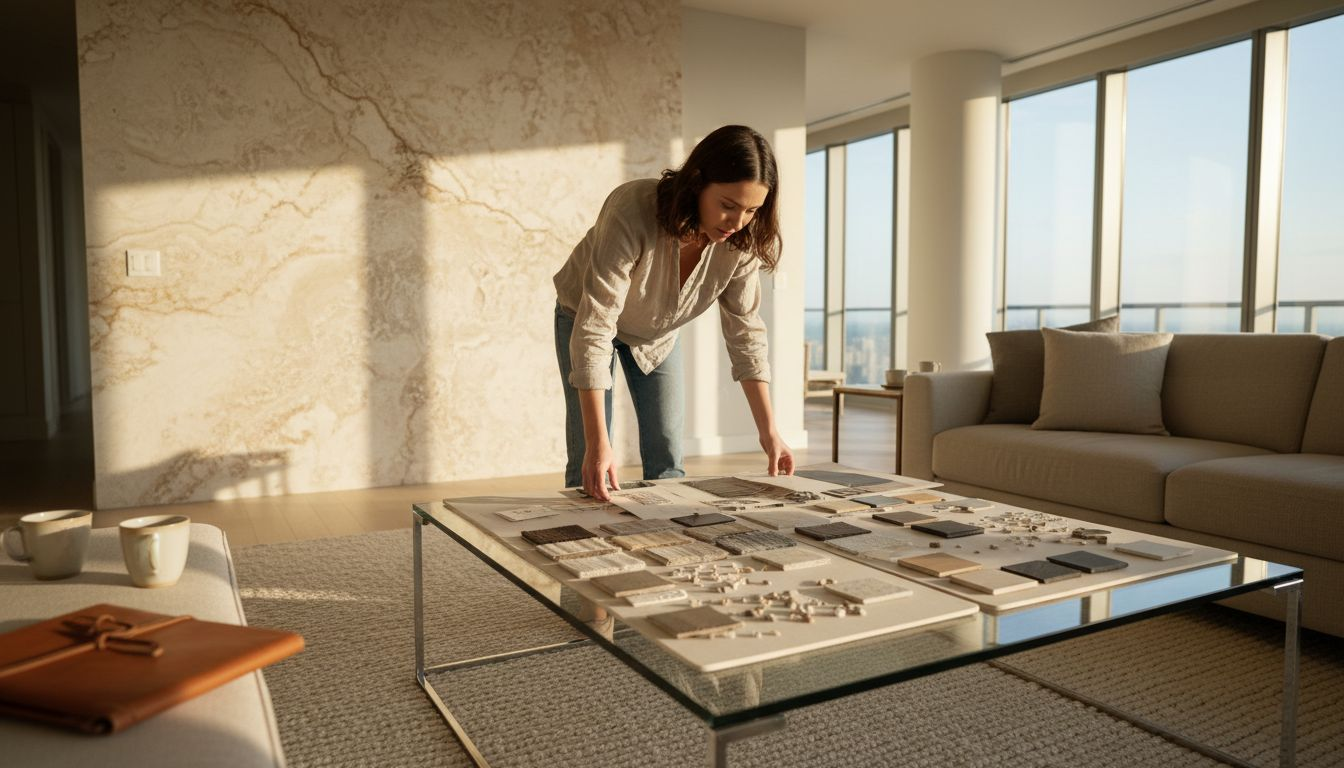
Modern high-end interior designers employ travertine across multiple applications, each maximizing the material’s distinct advantages. Travertine finishes range from polished to honed and tumbled, allowing you to calibrate the aesthetic from sleek contemporary to textured classical. This finish flexibility means you can specify the same material with dramatically different visual outcomes depending on project requirements.
Floor applications showcase travertine’s thermal comfort and visual richness. Luxury bathrooms benefit from travertine’s naturally warm underfoot feel, creating a sensory experience that cold marble or granite cannot match. In living spaces and entryways, travertine flooring sets a sophisticated tone immediately—clients recognize quality when they walk across it.
Wall cladding represents another powerful application. Travertine walls in contemporary luxury homes create focal points that photographs beautifully and responds dynamically to natural light throughout the day. The stone’s natural color variations and banding patterns generate visual interest without requiring additional decoration, making walls work harder in the overall design scheme.
Where you specify travertine matters as much as the material itself. Consider these high-impact applications:
The key is intentionality. Rather than specifying travertine everywhere, strategic placement creates more impact. A single feature wall in travertine reads as deliberate design; travertine throughout can feel cluttered unless orchestrated with careful restraint.
Contemporary design philosophy increasingly values authenticity and imperfection over sterile uniformity. Travertine’s natural variations, visible fossils, and aging patterns align perfectly with this cultural shift. Modern design trends emphasize travertine’s natural imperfections and aging patterns to create interiors that feel genuine and intentional rather than artificially perfected.
This represents a meaningful change from earlier design eras that treated stone imperfections as flaws to minimize. Today’s luxury clients understand that the slight variation in color, the natural pit in the stone, the visible aging—these are features, not defects. They signal authenticity and craftsmanship in ways mass-produced materials cannot replicate.
The warm, natural aesthetic travertine provides integrates seamlessly with contemporary minimalism, maximalist eclecticism, and everything between. Whether you’re designing a Scandinavian-inspired coastal home or a maximalist urban penthouse, travertine adapts to the design narrative while maintaining its distinctive character.
Modern luxury interiors use travertine not merely as a functional surface but as an aesthetic statement that conveys authenticity, craftsmanship, and timeless sophistication in every application.
Your specification choices communicate directly to clients. When you select travertine for premium applications, you’re signaling that the project prioritizes genuine materials, thoughtful design, and lasting quality. The material itself becomes part of the luxury narrative—not because it’s expensive, but because it’s real, beautiful, and built to endure.
Pro tip: Combine travertine with contrasting materials like dark wood, metal, or glass in single spaces to amplify its visual impact; pairing travertine feature elements with complementary materials creates sophisticated complexity that elevates the entire interior design narrative.
For quick reference, here is a table highlighting strategic ways travertine can be paired with other materials in luxury interiors:
| Travertine Use Case | Complementary Material | Design Benefit |
|---|---|---|
| Feature wall | Dark wood paneling | Enhances warmth, texture contrast |
| Fireplace surround | Metal accents | Adds sophistication, modern flair |
| Bathroom flooring | Glass fixtures | Creates airy, light-filled effect |
| Kitchen island | Matte stone or quartz | Introduces visual complexity |
Choosing travertine means making a three-part decision: initial investment, ongoing care, and environmental responsibility. These factors interconnect in ways that matter significantly to luxury clients. Understanding the complete cost picture—purchase, maintenance, and long-term value—positions you as a knowledgeable advisor rather than just a material specifier.
Travertine’s cost structure reflects its natural origin, quarrying complexity, and inherent luxury positioning. Quality variations create substantial price differences within the travertine category itself. Premium ancient deposits from geologically optimal regions command higher prices than younger, less geologically stable travertine. Origin matters: Mediterranean travertine differs in cost from domestically sourced material, influenced by transportation distances and quarrying infrastructure.
Finish options also impact pricing. Travertine costs vary depending on quality, origin, and finish, with polished surfaces requiring more processing than honed or tumbled finishes. Custom cuts for specific applications add labor costs. Thick slabs for countertops cost more than standard wall tiles.
When discussing pricing with clients, contextualize travertine against comparable luxury materials. While travertine may cost more than basic marble or granite, it often competes favorably with premium exotic stones. The investment reflects quarrying difficulty, processing requirements, and genuine rarity—not artificial scarcity marketing.
Travertine’s porous nature means maintenance conversations must happen early in the design process. This isn’t a flaw; it’s simply a characteristic that responsible designers address upfront. Regular cleaning with pH-neutral products protects the stone surface and prevents damage from harsh chemicals. Avoid acidic cleaners that etch travertine, and educate clients that even “natural” cleaners can harm the material.
Periodic sealing represents the critical maintenance task. High-quality sealants protect against staining and moisture penetration, extending travertine’s performance life significantly. Bathroom travertine requires more frequent sealing than accent walls, and kitchen islands see heavier use than decorative features. The sealing schedule depends on traffic levels and exposure conditions.
Here’s what responsible travertine maintenance actually entails:
Many designers avoid travertine specifically because they underestimate client willingness to maintain it properly. In reality, luxury clients who invest in premium materials typically commit to appropriate care. Present maintenance as part of the luxury experience—caring for fine materials is part of owning exceptional design.
Travertine’s sustainability profile balances natural advantages with honest environmental considerations. Natural geological formation means travertine continues forming in active thermal regions, creating renewable supply in specific locations. The stone’s longevity—lasting centuries with proper care—distributes environmental impact across decades of use, reducing the per-year footprint.
However, quarrying operations have legitimate environmental impacts. Sustainable travertine use emphasizes responsible sourcing and minimizing quarrying disruption, with transportation emissions representing another environmental factor. Specifying locally or regionally sourced travertine significantly reduces shipping-related carbon footprint. Consider reclaimed or salvaged travertine when appropriate—material reclaimed from historic buildings reduces quarrying pressure entirely.
The sustainability equation tips favorably when you account for travertine’s lifespan. A travertine countertop lasting 50+ years, maintained properly, compares favorably to engineered surfaces replaced every 10-15 years. The environmental cost per year of use drops dramatically when materials endure.
Travertine’s true cost includes initial investment, maintenance commitment, and environmental responsibility—a complete picture that justifies premium pricing for clients prioritizing lasting luxury and sustainability.
Present these factors together to clients rather than separately. Frame travertine as a long-term investment where higher initial cost, thoughtful maintenance, and sustainable sourcing create value across decades. Clients who understand they’re buying something that will outlast trends and inferior materials feel confident in their investment.
Pro tip: Prepare a detailed maintenance guide specific to each project, including recommended sealant products, cleaning schedule, and annual maintenance costs; providing this upfront prevents surprises and demonstrates professional care for client success.
Travertine isn’t universally appropriate for every luxury project, and honest designers acknowledge this reality. Understanding where travertine struggles and how it compares to alternatives prevents costly specification errors and client disappointment. The material’s limitations aren’t secrets—they’re characteristics that should inform your decision-making process.
Travertine’s porous nature creates specific vulnerability patterns that other natural stones simply don’t share. Common pitfalls include susceptibility to staining, scratching, and weathering without proper maintenance, making it unsuitable for certain applications despite its visual appeal. Understanding these vulnerabilities helps you avoid expensive mistakes.
Acidic substances represent travertine’s primary nemesis. Wine, citrus juice, vinegar, tomato sauce, and even some “natural” cleaners etch travertine permanently. A client’s morning orange juice on a travertine kitchen counter creates lasting damage. This isn’t a maintenance issue—it’s a chemistry problem that cannot be solved through careful cleaning alone.
Mechanical wear also concerns travertine in high-traffic applications. The stone scratches more easily than granite or quartz, and repeated foot traffic can dull its finish over time. Kitchen islands, bathroom vanities with frequent use, and commercial applications expose these limitations quickly. The porous surface also collects bacteria and mineral deposits in moisture-rich environments if not sealed aggressively.
Consider these genuine travertine application limitations:
Each alternative material makes different trade-offs, and there’s no universal winner—only material-to-application matches. Marble offers similar aesthetic warmth but greater porosity and acid sensitivity, making it worse for kitchens. Marble also scratches more easily than travertine. The advantage? Marble achieves higher polish and smoother finish when clients prefer that aesthetic.
Granite provides exceptional hardness and acid resistance, handling kitchen applications travertine cannot manage. However, granite lacks travertine’s distinctive porous texture and warm thermal properties. Granite also feels colder underfoot—a significant disadvantage in luxury bathrooms. Granite’s natural colors are typically darker and cooler-toned, limiting design flexibility in contemporary minimalist projects seeking warmth.
Engineered quartz delivers impressive stain resistance, extreme hardness, and color consistency that travertine cannot match. The durability advantage is real—quartz handles kitchen applications effortlessly. The trade-off? Engineered quartz lacks authenticity. It feels manufactured, ages uniformly (which some view negatively), and cannot replicate travertine’s distinctive character. Luxury clients increasingly reject quartz specifically because it looks and feels artificial.
Limestone resembles travertine closely but typically shows less distinctive patterning and color variation. It often costs less but delivers less visual impact. Limestone suffers from similar maintenance demands without the aesthetic payoff that justifies travertine’s price premium.
Here’s how materials compare across critical factors:
| Factor | Travertine | Marble | Granite | Quartz |
|---|---|---|---|---|
| Acid resistance | Poor | Poor | Excellent | Excellent |
| Scratch resistance | Moderate | Low | High | Very High |
| Thermal comfort | Excellent | Good | Poor | Fair |
| Visual authenticity | High | High | High | Low |
| Maintenance demands | Moderate-High | High | Low | Very Low |
| Cost | Moderate-High | Moderate-High | Moderate | Moderate |
| Design versatility | Excellent | Good | Good | Excellent |
The honest conversation with clients acknowledges that travertine excels in specific applications while struggling in others. Feature walls, bathroom flooring, and accent applications play to travertine’s strengths—visual impact, thermal comfort, distinctive character. Kitchen countertops and high-traffic commercial spaces expose its limitations. Mismatching material to application creates long-term dissatisfaction regardless of how beautiful the stone looks initially.
Travertine’s unique thermal spring formation gives it distinctive aesthetic properties often unmatched by alternatives, positioning it as the superior choice for luxury applications where authenticity and character matter more than maximum durability. When clients prioritize genuine materials, distinctive character, and timeless aesthetic over laboratory-tested durability, travertine wins decisively. When applications demand acid resistance and scratch protection, alternatives become necessary.
Successful travertine specification means matching its genuine strengths—aesthetic authenticity, thermal comfort, distinctive character—to applications where those qualities matter most while acknowledging its limitations honestly.
Your professional credibility grows when you recommend against travertine for unsuitable applications. Clients trust designers who honestly assess limitations rather than pushing materials for commission. Frame recommendations around the client’s specific priorities: if durability and low maintenance dominate, travertine may not be optimal. If authentic beauty and distinctive character drive decisions, travertine becomes the obvious choice.
Pro tip: Create a simple one-page material comparison chart specific to each project showing how travertine, marble, granite, and quartz perform across the application’s critical factors; this visual decision-making tool demonstrates professional analysis and helps clients understand why you recommended a specific material.
Choosing travertine for luxury design means embracing a material with natural thermal formation, authentic textures, and timeless character. If you are seeking to avoid the common pitfalls of porous stone while capturing its distinctive warmth and sophistication, exploring our carefully curated Travertine Collection – Marmorique offers solutions that meet the highest standards. Marmorique understands the importance of matching travertine’s unique qualities to your design vision and maintenance expectations.
Discover how premium travertine can transform bathrooms, feature walls, and decorative accents with enduring style. Visit https://marmorique.com today to browse our luxury options including elegant Bathroom sets – Marmorique and refined Decorative Trays – Marmorique. Act now to secure authentically sourced, handcrafted travertine pieces designed to bring warmth and timeless sophistication into your interiors.
Travertine is a porous form of limestone that forms through geological processes involving mineral hot spring waters. Calcium carbonate deposits occur when hot underground water rises, cools, and releases carbon dioxide at the surface, differing from marine limestone that forms from oceanic biological activity.
Travertine offers several advantages including its unique visual appeal with natural color variations and textures, excellent thermal properties which keep it warm underfoot, and durability when properly maintained. Its authenticity and timeless aesthetic also make it a preferred choice in high-end interiors.
To maintain travertine surfaces, regularly clean with pH-neutral products, seal the stone periodically to prevent moisture and staining, and avoid acidic cleaners which can etch the surface. Annual sealing is recommended for high-traffic areas.
Travertine is porous and has unique thermal properties, making it warm underfoot and aesthetically rich with natural variation. In contrast, marble is highly polished but can be more prone to scratching and acidic damage, while granite is extremely durable and resistant to both but lacks the distinctive character of travertine.


