Your Cart (0)
Your cart is empty
Free express shipping

Drawer menu
Free express shipping

Selecting a centerpiece for a sophisticated living space often means searching for more than just function. For many luxury homeowners and discerning interior designers, marble tables stand out as functional art pieces that symbolize wealth and refined taste. Their origins span over 20 unique marble varieties used throughout history, each offering a combination of distinctive veining, color, and tactile quality. Unrivaled in elegance and cultural significance, marble tables offer a remarkable way to express personal style while enriching the character of any urban interior.
| Point | Details |
|---|---|
| Unique Attributes of Marble Tables | Marble tables showcase natural variation, exceptional durability, and a cultural significance that symbolizes luxury and sophistication. |
| Design Diversity | Various marble types offer distinct appearances, making it easy to find options that complement any interior design. |
| Investment Potential | Natural marble tables appreciate over time, making them valuable investments compared to conventional materials. |
| Maintenance Needs | Specialized care is essential for marble tables to protect against scratches, stains, and chemical damage, ensuring their longevity and beauty. |
Marble tables represent far more than mere furniture - they are functional art pieces that transform interior spaces through their extraordinary material qualities. Distinctive geological formation gives marble its remarkable characteristics, creating surfaces that communicate luxury, sophistication, and timeless aesthetic appeal.
The unique properties of marble tables stem from several key attributes:
Traditionally, marble tables have transcended mere functional purposes. Complex material semantics reveal that these pieces communicate social status and cultural meanings beyond their basic utility. Archeological evidence suggests that over 20 distinct marble varieties were historically utilized, each selected to express economic prosperity and artistic sophistication.
Contemporary marble tables continue this legacy, bridging classical design traditions with modern interior aesthetics. Their enduring appeal lies in their ability to serve as statement pieces that elevate any living space through natural beauty and refined craftsmanship.
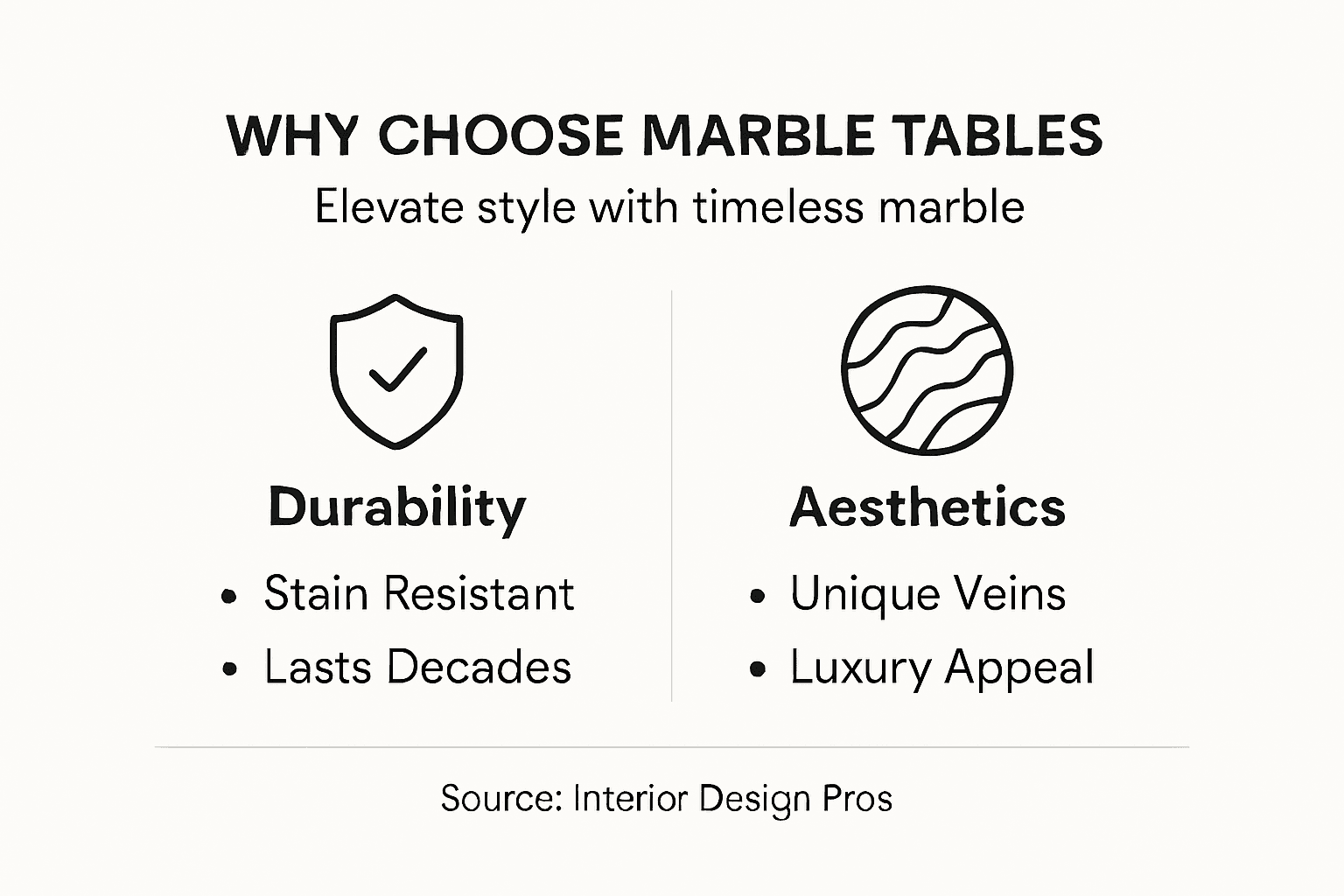
Pro tip: When selecting a marble table, examine the stone’s veining patterns and ensure the piece complements your existing interior color palette and design theme.
Marble tables represent an extraordinary fusion of geological artistry and interior design, offering remarkable global design variations that cater to diverse aesthetic preferences. Each marble type brings a unique narrative of color, texture, and regional character to interior spaces.
The world of marble tables encompasses several distinctive categories:
Global marble varieties provide designers with an extensive palette of colors and textures. White marbles like Carrara feature soft, subtle veining that creates an elegant, understated look, while bolder options such as Emperador offer rich, dramatic brown tones with pronounced patterns. These variations allow homeowners to select pieces that precisely match their interior design vision.
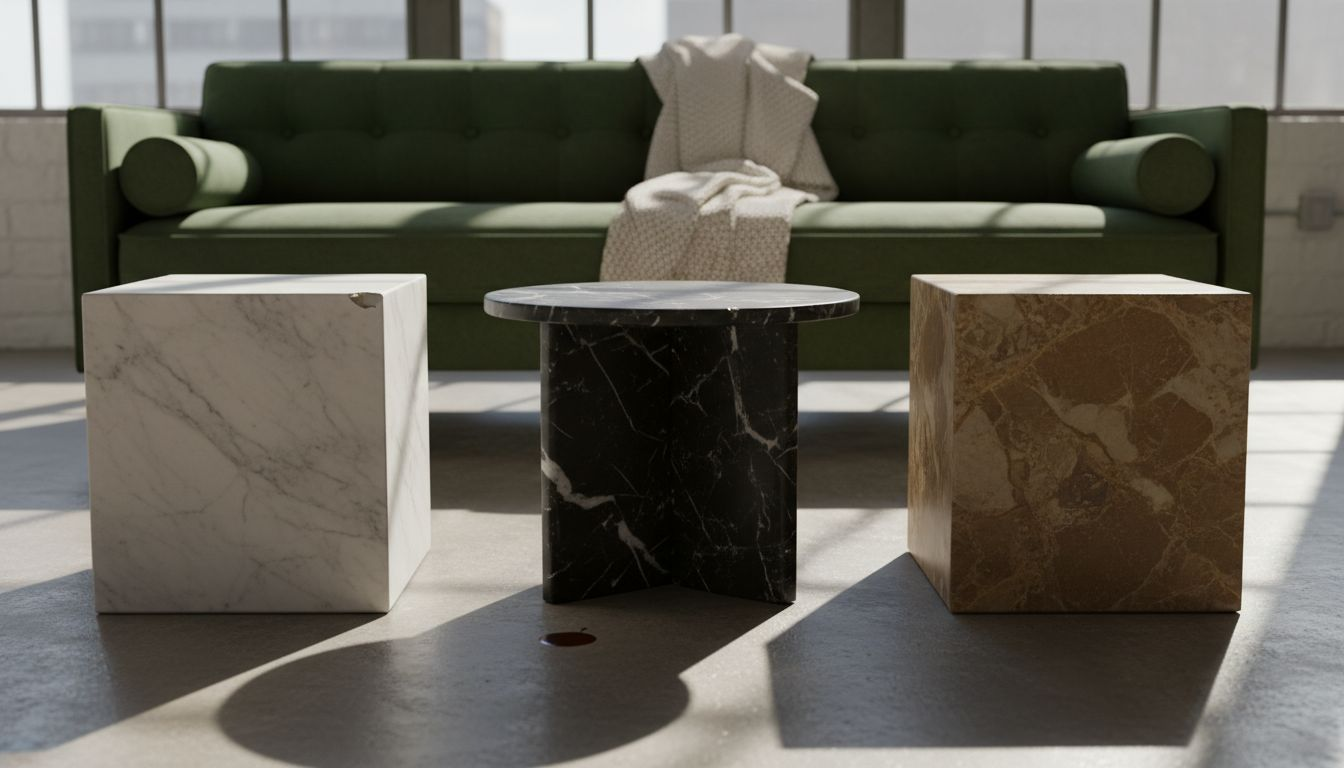
Here’s a snapshot comparing popular marble table varieties and their design advantages:
| Marble Type | Appearance Description | Design Suitability |
|---|---|---|
| Carrara | Soft white, subtle gray veins | Minimalist, modern interiors |
| Calacatta | Bright white, bold veins | Luxurious, statement pieces |
| Emperador | Deep brown, dramatic streaks | Classic, cozy environments |
| Nero Marquina | Rich black, sharp white lines | Contemporary, bold settings |
| Statuario | Bright white, linear veining | Elegant, high-end designs |
| Crema Cenia | Warm beige, uniform veining | Neutral, calming spaces |
Contemporary marble table designs range from minimalist geometric forms to ornate, sculptural pieces. Some feature sleek metal bases that contrast with the stone’s organic texture, while others embrace classic pedestal or traditional leg configurations. The versatility of marble enables designers to create tables that function as both functional furniture and artistic statements.
Pro tip: When selecting a marble table, consider the room’s lighting and existing color scheme to ensure the stone’s natural veining and color complement your overall design aesthetic.
Marble tables transcend ordinary furniture, embodying intricate material narratives that communicate sophistication and cultural refinement. Their unique aesthetic qualities transform interior spaces, creating focal points that blend functionality with artistic expression.
The signature characteristics of marble tables include:
Marble’s nuanced materiality extends beyond pure aesthetics, representing a complex interplay of cultural symbolism and design language. Each table becomes more than a surface - it’s a statement piece that communicates elegance, historical depth, and personal taste.
Modern interior designers leverage marble tables as transformative elements that bridge architectural traditions with contemporary sensibilities. The stone’s inherent qualities - its luminosity, depth, and organic patterns - create visual narratives that elevate surrounding spaces, turning functional furniture into artistic expressions of sophisticated design.
Pro tip: Position your marble table where natural light can highlight its unique veining and create subtle, dynamic visual effects throughout the day.
Marble tables represent a sophisticated investment strategy in home furnishings, with unique market positioning that distinguishes them from conventional furniture options. Their enduring value extends far beyond initial purchase price, encompassing aesthetic, functional, and long-term financial considerations.
Comparative investment characteristics include:
Marble’s investment potential emerges from its intrinsic qualities of durability, uniqueness, and timeless appeal. Unlike mass-produced furniture that quickly loses value, natural marble tables maintain their aesthetic and monetary worth through careful maintenance and classic design.
Compare the investment and care qualities of marble tables versus other popular table materials:
| Material | Investment Appeal | Maintenance Effort | Longevity |
|---|---|---|---|
| Natural Marble | Appreciates over time | Requires specialized care | Decades with maintenance |
| Engineered Stone | Holds value moderately | Easy, less sensitive | Durable but may fade |
| Solid Wood | Moderate, may depreciate | Routine cleaning, can scratch | Prone to wear, refinishing |
| Synthetic Surface | Low, mass-produced | Minimal, general cleaners | Shorter lifespan |
The global market increasingly recognizes marble as a premium material, with demand driven by luxury residential and commercial applications. Discerning buyers understand that a high-quality marble table is not merely a furniture piece, but a functional art investment that can potentially appreciate over time, particularly when sourced from exceptional quarries and crafted with exceptional skill.
Pro tip: Select marble tables from reputable sources with documented stone origin and craftsmanship to maximize long-term investment potential and aesthetic value.
Marble tables demand specialized maintenance to preserve their exquisite beauty and structural integrity. Marble’s delicate nature requires proactive care strategies that protect against potential damage and maintain their pristine appearance.
Common maintenance challenges include:
Understanding the nuanced care requirements is crucial for marble table owners. Protective measures like immediate spill cleanup, using coasters, applying periodic sealants, and avoiding harsh cleaning chemicals can significantly extend the table’s aesthetic and functional lifespan. The natural patina that develops over time should be embraced as a mark of authenticity rather than viewed as deterioration.
Professional maintenance involves using specialized marble-safe cleaning products, implementing gentle cleaning techniques, and scheduling periodic professional restoration. Homeowners should develop a comprehensive care routine that addresses both daily maintenance and long-term preservation, recognizing that marble’s beauty demands thoughtful, consistent attention.
Pro tip: Create a dedicated marble care kit with pH-neutral cleaners, soft microfiber cloths, and protective sealants to ensure consistent, gentle maintenance.
Discover how to turn your living space into a sanctuary of sophistication and luxury with natural marble tables that boast unique veining and enduring strength. As the article highlights, marble offers a tactile richness and optical depth that simply cannot be matched by synthetic materials or wood. If you are seeking to enhance your home or commercial interiors with statement pieces that embody elegance and cultural refinement look no further.
Explore the curated collection at Marmorique where craftsmanship and timeless design merge to provide high-quality marble tables and decorative stone furnishings. Don’t wait to invest in pieces that offer not only aesthetic value but also long-term durability and appreciation potential. Visit Marmorique’s landing page to experience luxury like never before and take the first step in owning marble decor that truly elevates your interior environment.
Marble tables are known for their natural variation, durability, thermal properties, and cultural significance that convey luxury and sophistication.
Marble tables typically appreciate in value over time due to their durability and timeless appeal, while other materials like wood and synthetic surfaces may depreciate faster.
Common types of marble include Carrara, Calacatta, Emperador, Nero Marquina, and Statuario, each offering unique patterns and colors suitable for various design styles.
To care for marble tables, promptly clean spills, use coasters, apply sealants periodically, and avoid harsh chemicals. Regular maintenance will help preserve their aesthetic appeal and structural integrity.


