Your Cart (0)
Your cart is empty
Free express shipping

Drawer menu
Free express shipping

Choosing the right materials for upscale interiors often feels like balancing art and science. For North American designers, travertine’s dynamic geological phenomenon offers both aesthetic beauty and technical intrigue, thanks to its origins in hot springs, caves, and mineral-rich waters. This article brings clarity to common misconceptions about travertine, exploring its distinctive formations, regional variations, and signature features that elevate luxury spaces.
| Point | Details |
|---|---|
| Understanding Travertine | Travertine is a complex natural stone formed through mineral spring deposits and exhibits significant variations in appearance and structure. |
| Geological Formation | The development of travertine involves intricate processes of mineral precipitation influenced by environmental conditions and geological interactions. |
| Types and Regional Varieties | Travertine can be classified into various types based on porosity and mineral composition, with distinct characteristics found in different global regions. |
| Selecting Authentic Travertine | Careful evaluation is essential for authentic travertine selection, focusing on porosity, provenance, and surface texture to avoid inferior materials. |
Travertine represents a distinctive natural stone formation with remarkable geological complexity and aesthetic versatility. Formed through mineral spring deposits, this sedimentary rock emerges through intricate precipitation processes involving calcium carbonate, creating unique structural characteristics that fascinate designers and geologists alike.
Understanding travertine requires recognizing its nuanced origins and diverse manifestations. The stone typically develops in several distinctive environments, including:
Contrary to popular misconceptions, travertine is not a uniform material but a dynamic geological phenomenon with significant variation. Scientific classification reveals complex formation mechanisms involving multiple factors like temperature, mineral composition, and local environmental conditions.
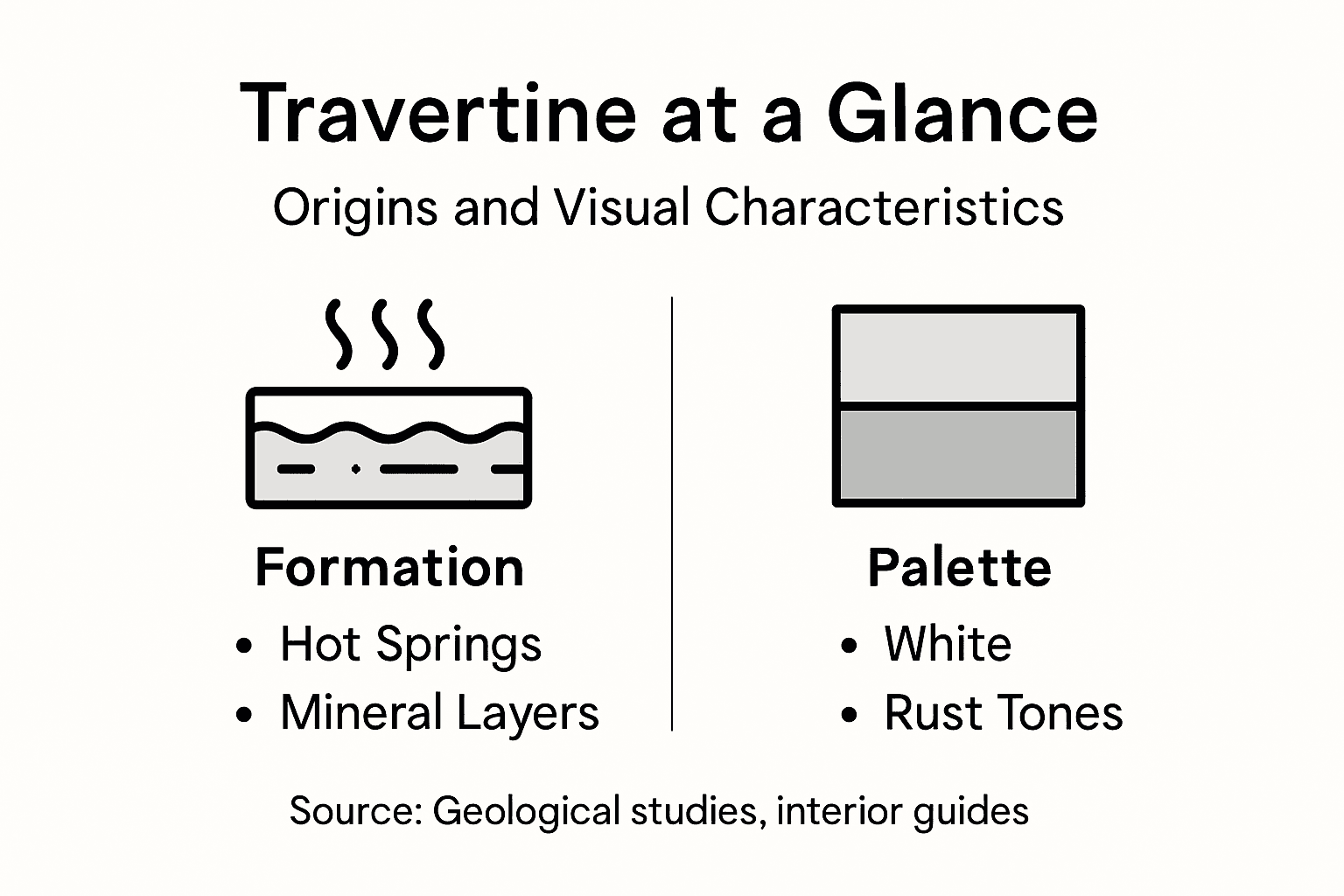
Travertine’s visual characteristics span a remarkable palette, ranging from pristine white to rusty earth tones. Its unique texture emerges from rapid calcium carbonate precipitation, often featuring fibrous or concentric patterns that make each stone piece inherently distinctive. Designers appreciate these natural variations, which provide unprecedented aesthetic opportunities in interior architectural applications.
Pro tip: When selecting travertine for design projects, always request samples that showcase the stone’s natural variation to ensure you capture its most authentic visual characteristics.
Travertine formation represents a complex geological process involving multiple environmental and chemical interactions. Mineral precipitation through tectonic movements creates these remarkable stone formations, emerging through intricate interactions between water, minerals, and geological structures.
The primary mechanisms of travertine development involve several critical stages:
Hydrothermal systems like Yellowstone demonstrate extraordinary travertine formation processes. These systems typically involve heated meteoric waters circulating through underground limestone formations, dissolving calcium and transporting mineral compounds before depositing distinctive geological structures.
Travertine’s formation timeline spans significant geological periods, particularly from the late Pleistocene to early Holocene epochs. The stone’s development is influenced by multiple factors including water temperature, chemical composition, geological stress, and environmental conditions. Regions with active tectonic movements and diverse thermal landscapes become particularly conducive to creating these remarkable stone formations.
Pro tip: Study local geological maps and thermal activity reports to understand the potential travertine formation zones in specific geographic regions.
Travertine diversity reveals an extraordinary geological spectrum with remarkable regional characteristics. Global travertine formations demonstrate substantial variations in mineral composition, porosity, and structural complexity across different geographical environments.
Travertine can be categorized into several primary types based on distinct formation characteristics:
Regional travertine deposits in China exemplify the remarkable diversity of these geological formations. Specific locations like Huanglong showcase distinctive travertine varieties, including porous, dense, and detrital types, each representing unique environmental interactions and mineral precipitation processes.
Geographical variations significantly influence travertine characteristics, with notable formations found in regions such as Italy, Yellowstone National Park, Pamukkale in Turkey, and the high-altitude glacial valleys of China. These locations produce travertine with mineral purities often exceeding 95% calcium carbonate, reflecting the intricate relationships between local geological conditions, water chemistry, and biological activities.
Here’s a quick comparison of key global travertine regions and their distinctive qualities:
| Region | Notable Features | Typical Colors |
|---|---|---|
| Italy (Tivoli) | Dense structure, historical use | Cream, light beige |
| Yellowstone, USA | Unique terrace formations | White, tan, gray |
| Pamukkale, Turkey | Thermal pools, layered deposits | White, pale blue |
| Huanglong, China | High elevation diversity | Golden, yellowish tones |
Pro tip: When selecting travertine for design projects, carefully examine samples from different regional sources to understand their unique textural and compositional variations.
Natural travertine embodies an extraordinary aesthetic complexity that transforms geological processes into visual poetry. Spectacular travertine formations reveal a mesmerizing spectrum of colors and textures that capture the intricate dance between mineral precipitation and environmental interactions.
The signature characteristics of travertine include:
Travertine’s depositional morphology demonstrates remarkable geological artistry through extraordinary natural formations such as expansive terraces, intricate mounds, and delicate crusts. These structures emerge through rapid calcium carbonate precipitation, creating landscapes that blur the boundaries between geological process and artistic expression.
The visual drama of travertine extends beyond mere mineral composition, encompassing breathtaking natural monuments like the terraced pools of Pamukkale and the dramatic limestone cascades of Yellowstone. Each formation tells a unique story of geological time, water chemistry, and the subtle influences of temperature and biological activity, presenting a canvas where scientific precision meets aesthetic wonder.
Pro tip: Illuminate travertine surfaces strategically to highlight their natural translucency and intricate textural variations.
Luxury interior design transforms spaces through carefully selected materials that communicate sophistication and timeless elegance. Travertine’s versatile design potential offers designers an extraordinary medium for creating refined, textural environments that transcend conventional aesthetic boundaries.
Travertine finds exceptional applications in luxury interiors across multiple design elements:
Designers leverage travertine’s unique characteristics to introduce warmth and sophistication into contemporary spaces. The stone’s natural palette of earthy tones enables seamless integration with diverse design styles, from minimalist modernism to rich, textural transitional aesthetics.

The material’s inherent versatility allows interior professionals to create layered, multidimensional experiences. Travertine’s ability to capture light, reflect subtle color variations, and provide tactile complexity makes it an exceptional choice for high-end residential and commercial environments seeking to communicate understated luxury and refined taste.
Pro tip: Select travertine samples with varied tonal ranges to create depth and visual intrigue in your interior design compositions.
Authentic travertine selection requires meticulous attention to detail and comprehensive understanding of the stone’s inherent characteristics. Critical evaluation of travertine quality demands sophisticated knowledge to distinguish genuine materials from inferior imitations.
Potential pitfalls when selecting travertine include:
Expert travertine selection strategies emphasize understanding nuanced material characteristics before making purchasing decisions. Discerning designers and homeowners must evaluate factors such as mineral composition, surface texture, color variation, and structural integrity to ensure authentic, high-quality travertine.
The most sophisticated approach involves requesting multiple samples, conducting thorough visual and tactile inspections, and consulting geological experts who can verify the stone’s authenticity. Reputable sources will provide comprehensive documentation about the travertine’s geological origin, mineral composition, and recommended applications, enabling informed selection that guarantees aesthetic and functional excellence.
Use this table to quickly check important factors during travertine selection:
| Evaluation Factor | Why It Matters | Action Step |
|---|---|---|
| Porosity | Affects durability and maintenance | Test with water absorption |
| Provenance | Verifies authenticity and quality | Request documentation |
| Surface Texture | Influences slip resistance and aesthetics | Inspect and feel sample |
| Mineral Purity | Impacts color stability | Ask for laboratory analysis |
Pro tip: Always request detailed provenance documentation and conduct professional testing to validate the authenticity of your selected travertine.
Understanding the intricate formation and natural beauty of travertine reveals how this unique stone can transform your living spaces. If you have struggled with finding authentic travertine that captures the rich textures and color variations described in the article, Marmorique offers a curated collection of premium travertine products crafted to bring timeless elegance into your home or commercial interior. With a focus on natural variation, craftsmanship, and quality, our pieces help you avoid common pitfalls like poor porosity or artificial finishes.
Discover how the geological complexity and stunning aesthetic of travertine can become a signature feature in your interior design by exploring our exclusive range at Marmorique. Whether you seek luxurious countertop surfaces, elegant bathroom sets, or distinctive decor accessories, start your journey to refined, authentic stone elegance today. Visit Marmorique now and choose from natural travertine selections that truly honor the stone’s origins and beauty.
Travertine is a unique natural stone formed through the deposition of calcium carbonate from mineral springs. Its formation involves intricate geological processes, including the dissolution of limestone and the precipitation of minerals as water cools and degasses.
There are several primary types of travertine, including dense travertine with minimal porosity, porous travertine with significant interconnected spaces, fibrous travertine featuring threadlike formations, and banded travertine displaying layered patterns. Each type has distinct characteristics suited for different applications.
Travertine can be used in various ways, including flooring, wall cladding, countertops, and decorative features. Its natural color variations and textures allow it to seamlessly integrate into different design styles, enhancing the aesthetic of any space.
When selecting travertine, avoid pitfalls like purchasing heavily sealed stones that hide natural features, overlooking porosity and absorption rates, failing to verify the stone’s origin, neglecting maintenance requirements, and choosing synthetic variants. Always request multiple samples and documentation for informed decision-making.


