Your Cart (0)
Your cart is empty
Free express shipping

Drawer menu
Free express shipping

Many interior designers struggle to communicate marble specifications confidently to clients and suppliers. Terminology confusion leads to mismatched expectations, budget overruns, and design disappointments. This guide equips you with essential marble product terminology to select materials precisely, clarify client conversations, and elevate your design authority. You’ll master core terms, finishes, grades, stone comparisons, misconception corrections, categorization frameworks, and client consultation strategies.
| Point | Details |
|---|---|
| Master marble terminology | Understanding core terms like veining, finish, and grade improves design specificity and professional communication. |
| Finishes affect aesthetics and care | Polished, honed, and leathered finishes create distinct visual impacts and require different maintenance approaches. |
| Grades determine quality and price | Premium, commercial, and rustic grades influence project suitability, budget alignment, and client expectations. |
| Marble differs from travertine | Formation, texture, and durability distinguish marble from similar stones, guiding accurate material selection. |
| Clear misconceptions | Correcting terminology myths about grades and veining patterns enhances client trust and reduces specification errors. |
Veining defines the natural pattern and color variation within marble slabs, creating each piece’s unique character. These organic lines result from mineral deposits and geological processes, making no two slabs identical. Finish refers to the surface treatment applied to marble, with polished, honed, and leathered being the most common options. Grading categorizes marble based on visual quality and defect levels, directly impacting pricing and application suitability.
Marble types are classified by appearance characteristics and performance properties. Carrara marble features soft gray veining, while Calacatta displays bold, dramatic patterns. Understanding these fundamental terms helps you specify materials accurately and communicate professionally with clients and suppliers. Understanding key marble terms like veining, finish, grade, and type lays the foundation for successful design specification.
These terms form the vocabulary you’ll use daily in project planning. When you can articulate why a specific finish suits a bathroom versus a kitchen, clients perceive expertise. Precise terminology prevents costly mistakes during ordering and installation. Explore detailed guidance on selecting optimal marble varieties in our best marble types interiors 2026 guide.
Key marble terminology includes:
Polished marble delivers a high gloss surface that reflects light dramatically, enhancing color depth and veining contrast. This mirror-like finish works beautifully in formal spaces and luxury applications where elegance is paramount. Honed marble presents a matte, smooth surface with minimal shine, offering understated sophistication. The muted appearance suits contemporary and transitional designs where subtlety matters.
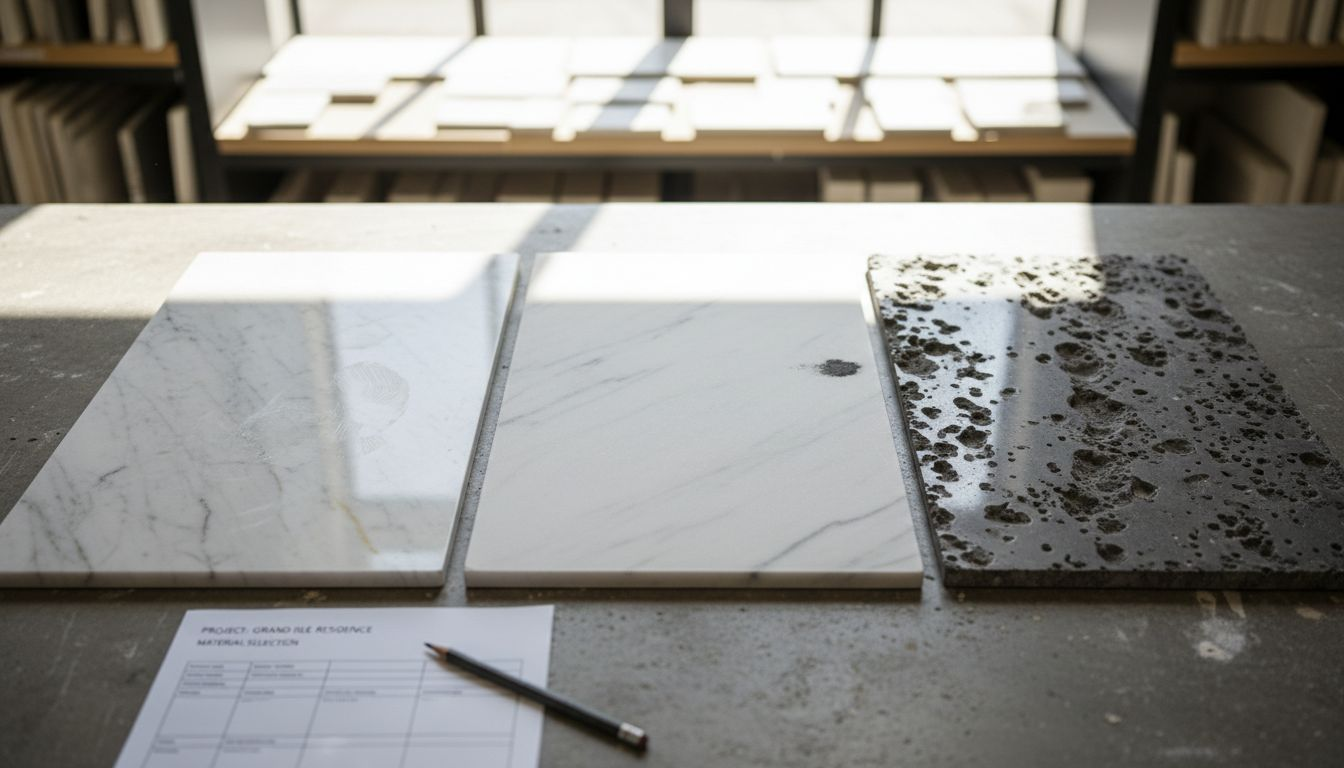
Leathered finish features a textured surface created through diamond-tipped brushes, producing a slightly raised pattern. This finish adds tactile interest and hides fingerprints better than polished surfaces. Maintenance requirements vary significantly between finishes. Polished marble demands regular sealing and careful cleaning to preserve its reflective quality, while honed finishes forgive minor scratches more gracefully.
Each finish type creates distinct design moods. Polished suits traditional and glamorous aesthetics, honed aligns with modern minimalism, and leathered complements rustic or organic styles. Consider traffic levels and functional demands when selecting finishes. High-traffic areas benefit from honed or leathered options that resist wear visibility.
Pro Tip: Match finish selection to both aesthetic goals and practical durability needs by evaluating room function, lighting conditions, and client maintenance willingness before finalizing specifications.
Finish selection significantly influences project outcomes:
Review comprehensive marble selection strategies in our best marble types interiors 2026 guide for finish-specific recommendations.
Premium grade marble exhibits minimal defects, consistent color, and uniform veining patterns. This top tier commands higher prices but delivers predictable aesthetics for luxury projects. Commercial grade shows moderate variation and minor imperfections that don’t compromise structural integrity. This mid-range option balances quality and budget for many residential and light commercial applications.
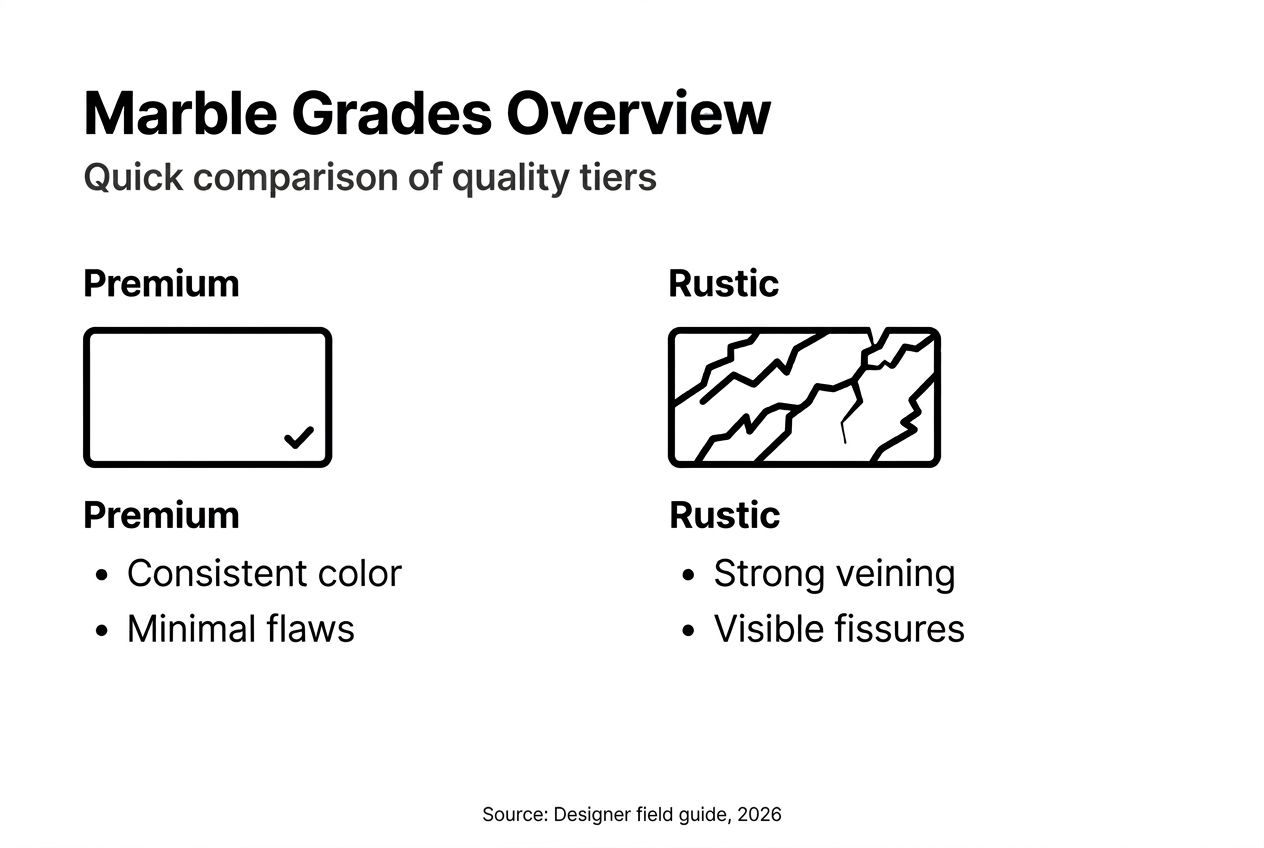
Rustic grade features pronounced natural characteristics including color variation, visible fissures, and irregular veining. Misinterpretation of marble terms like ‘rustic’ as lower quality rather than style leads to suboptimal client guidance. Rustic marble serves specific design visions where organic character enhances rather than detracts from the intended aesthetic.
Defect rates influence both visual quality and pricing structures across grade categories. Premium slabs undergo rigorous selection, while commercial and rustic grades accommodate natural variations. Project suitability depends on design intent, budget parameters, and client expectations. A boutique hotel lobby might demand premium grade, while a farmhouse kitchen could showcase rustic character beautifully.
Grading directly impacts client conversations about budget allocation. When you explain that rustic isn’t inferior but rather character-rich, clients make informed decisions aligned with their vision. Understanding grade terminology prevents specification errors and supports transparent pricing discussions.
Grade characteristics and applications:
Explore grade-specific marble options in our best marble types interiors 2026 guide to match client needs with appropriate quality levels.
Marble forms through metamorphic processes where limestone recrystallizes under heat and pressure, creating dense material with distinctive veining. Travertine develops through sedimentary processes as calcium carbonate precipitates from mineral springs, resulting in porous texture with characteristic cavities. These formation differences create distinct visual and performance characteristics.
Surface texture distinguishes these stones immediately. Marble displays smooth, often veined surfaces when polished, while travertine shows pitted, textured faces even after finishing. Durability varies between materials. Marble generally offers superior hardness and scratch resistance compared to travertine’s softer composition. Both stones require sealing, but travertine demands more frequent maintenance due to its porous nature.
| Feature | Marble | Travertine |
|---|---|---|
| Formation | Metamorphic | Sedimentary |
| Texture | Smooth, veined | Porous, cavity-rich |
| Hardness | Higher | Moderate |
| Maintenance | Moderate sealing | Frequent sealing |
| Best uses | Countertops, luxury floors | Rustic floors, outdoor |
Marble excels in applications requiring refined elegance and durability, such as bathroom vanities and statement floors. Travertine suits projects emphasizing natural texture and outdoor compatibility, including patios and Mediterranean-style interiors. Understanding these distinctions prevents material misapplication and supports confident recommendations.
Material selection framework:
Find detailed marble type comparisons in our best marble types interiors 2026 guide to refine selection criteria.
The rustic grade label frequently causes confusion, with clients mistaking it for inferior quality rather than a stylistic choice emphasizing natural character. This misconception leads to missed opportunities where rustic marble would perfectly suit farmhouse, industrial, or organic design visions. Veining pattern expectations also create challenges. Clients sometimes anticipate uniform veining across all slabs, not realizing natural variation is inherent to marble’s appeal.
Over 25% of designers report client confusion around marble grade versus style terminology causing specification errors. Grade and finish terms blur together in client minds. They might confuse a honed finish with commercial grade or assume polished automatically means premium. These misunderstandings complicate specification conversations and can derail project timelines.
Communication strategies clarify terminology effectively. Use visual samples to demonstrate finish differences and grade variations side by side. Explain that rustic celebrates nature’s artistry rather than indicating flaws. Frame veining variation as uniqueness rather than inconsistency. When clients grasp these distinctions, they make confident decisions aligned with their design vision.
Pro Tip: Address terminology misunderstandings proactively during initial consultations to build designer credibility and prevent costly revisions later in the project timeline.
Clarity-building approaches:
Deepen your terminology expertise with our best marble types interiors 2026 guide for client-ready explanations.
A three-dimensional categorization framework simplifies marble selection by organizing options along visual texture, finish type, and functional application axes. Visual texture ranges from subtle to dramatic veining, helping narrow choices based on design intensity preferences. Finish type encompasses polished, honed, and leathered surfaces, each creating distinct aesthetic and maintenance profiles. Functional application considers installation location and performance demands.
This systematic approach streamlines decision-making during design development. Instead of browsing hundreds of options randomly, you filter systematically by category intersections. A client seeking dramatic bathroom vanity marble narrows to bold veining, polished finish, and moisture-resistant applications. This targeted approach saves time and increases specification confidence.
| Category | Attribute Options | Selection Criteria |
|---|---|---|
| Visual Texture | Subtle, moderate, dramatic veining | Design intensity, pattern preference |
| Finish Type | Polished, honed, leathered | Aesthetic goal, maintenance tolerance |
| Functional Use | Countertops, floors, walls, wet areas | Installation location, durability needs |
| Grade Level | Premium, commercial, rustic | Budget, quality expectations |
Applying the framework follows these steps:
The framework enhances client presentations by organizing choices logically. You guide clients through systematic elimination rather than overwhelming them with unlimited options. Supplier communications become more efficient when you request specific category combinations. This structured methodology demonstrates professional expertise while accelerating project timelines.
Explore categorized marble selections in our best marble types interiors 2026 guide to implement this framework immediately.
Mastering terminology transforms client consultations from uncertain discussions into confident guidance sessions. Use precise terms to align expectations early, explaining how veining variation creates uniqueness rather than inconsistency. When clients hear you articulate finish differences with authority, trust deepens. Terminology precision reduces misunderstandings that cause project delays and budget overruns.
Practical strategies enhance communication effectiveness. Create a terminology glossary handout for clients, defining key terms with images. During material selections, reference specific terminology to explain recommendations. Instead of saying “this one looks nicer,” explain “the honed finish reduces glare while the moderate veining complements your minimalist aesthetic.” This approach demonstrates expertise while educating clients.
Real-world applications prove terminology’s value. A designer specifying bathroom marble can explain why polished finish suits low-traffic vanity tops while honed works better for shower floors. Terminology enables you to justify material choices beyond aesthetics, incorporating maintenance realities and performance expectations. Clients appreciate this comprehensive perspective.
Pro Tip: Tailor terminology depth to individual client knowledge levels, offering simplified explanations for novices while engaging design-savvy clients with technical nuances.
Client communication techniques:
Refine your client consultation approach using insights from our best marble types interiors 2026 guide for terminology-rich conversations.
Your enhanced marble terminology knowledge opens opportunities to specify stunning materials with confidence. Marmorique offers a curated collection of premium marble products ideal for diverse interior styles and applications. Our selections reflect the terminology distinctions you’ve mastered, from polished Carrara elegance to rustic character-rich options.
Each product listing provides detailed finish, grade, and veining information to support informed decisions. Browse our collections to discover marble solutions matching your clients’ aesthetic visions and performance requirements. Visit Marmorique marble solutions to explore products, access expert guides, and elevate your design specifications with quality natural stone.
Polished marble features a glossy, reflective surface that enhances color depth and veining contrast dramatically. Honed marble presents a matte, smooth finish with minimal shine, creating understated elegance. Polished requires more frequent maintenance to preserve its gloss, while honed forgives minor scratches and stains more gracefully.
Higher grades like premium contain fewer defects and display consistent color, commanding premium pricing for luxury applications. Lower grades may show natural imperfections and variation but suit budget-conscious projects or designs celebrating rustic character. Grade selection directly influences both visual outcomes and cost parameters.
No, marble and travertine differ fundamentally in formation, texture, durability, and appearance characteristics. Marble offers smooth veined surfaces with superior hardness, while travertine displays porous texture with characteristic cavities. Each stone suits distinct aesthetics and functional requirements, so selection should reflect material-specific properties rather than treating them as interchangeable.
Clients frequently confuse rustic grade with inferior quality when it actually represents a stylistic choice emphasizing natural character. Veining patterns vary naturally across slabs, affecting both appearance and pricing. Designers should clearly distinguish between grade classifications and finish types, as clients often conflate these separate terminology categories during material selection discussions.


