Your Cart (0)
Your cart is empty
Free express shipping

Drawer menu
Free express shipping

Selecting the perfect marble for an upscale home goes far beyond simply choosing a beautiful stone. For luxury interior designers and decorators in North America, the real challenge is weaving marble into sophisticated spaces so every slab supports the existing design narrative. By focusing on the strategic visual integration of marble with architectural style, lighting, and the current palette, you create interiors that feel intentional, balanced, and genuinely elevated.
| Key Point | Explanation |
|---|---|
| 1. Assess Existing Elements | Evaluate your interior’s architectural style, colors, lighting, and textures before introducing marble. |
| 2. Select Complementary Marbles | Choose marble types that harmonize or intentionally contrast with your current design for a cohesive look. |
| 3. Coordinate Colors and Patterns | Match undertones and balance veining to create visual harmony in your design scheme. |
| 4. Incorporate Marble Strategically | Use marble in key areas like kitchens and bathrooms with attention to durability and aesthetics. |
| 5. Review for Visual Harmony | Regularly reassess marble integration by checking colors, textures, and lighting to ensure cohesive design. |
Before introducing marble into your interior design, you need a comprehensive understanding of your current space. Evaluating your interior context allows you to create a harmonious and sophisticated marble integration that elevates rather than disrupts your existing aesthetic.
Start by conducting a detailed assessment of your interior environment. This systematic evaluation involves examining several critical elements:
Pay special attention to how marble will interact with these existing design elements. Your goal is strategic visual integration, not just random placement. Consider how different marble varieties—from classic white Carrara to dramatic black Nero Marquina—can complement or contrast with your current interior.
A thoughtful marble selection should feel like a natural extension of your existing design, not an afterthought.
Pro tip: Take high-resolution photographs of your space from multiple angles to help you visualize marble placement and potential visual interactions.
Selecting the right marble types is crucial for creating a cohesive and visually stunning interior design. Marble selection involves understanding distinct characteristics that can dramatically transform your space’s aesthetic appeal.
When choosing marble types, consider these key factors for complementary design:
Classic marble varieties offer unique design opportunities. Carrara marble provides soft, subtle elegance with its white background and gentle gray veining. In contrast, Nero Marquina delivers dramatic black surfaces with striking white linear patterns, perfect for creating bold statement areas.

Here’s a comparison of popular marble types and their recommended uses:
| Marble Type | Visual Impact | Recommended Area | Durability Level |
|---|---|---|---|
| Carrara | Soft, subtle elegance | Bathroom, accent walls | Moderate-High |
| Nero Marquina | Dramatic, bold statements | Fireplace, tabletops | High |
| Calacatta | Luxurious, striking veins | Kitchen countertops | Very High |
| Crema Marfil | Warm, creamy tones | Flooring, entryways | Moderate |
Successful marble selection is about creating visual dialogue between different stone surfaces and existing design elements.
Pro tip: Always obtain marble samples and view them in your actual space under different lighting conditions to ensure the most accurate visual assessment.
Successfully integrating marble requires strategic color and pattern coordination that transforms your interior into a cohesive design masterpiece. Achieving visual harmony demands a thoughtful approach to selecting and blending marble varieties.
Consider these critical strategies for marble color and pattern coordination:
Designers often employ two primary approaches to marble coordination. Monochromatic strategies involve selecting marble variations within the same color family, creating subtle depth and sophistication. Contrasting techniques deliberately pair marbles with opposing characteristics to generate visual drama and interest.
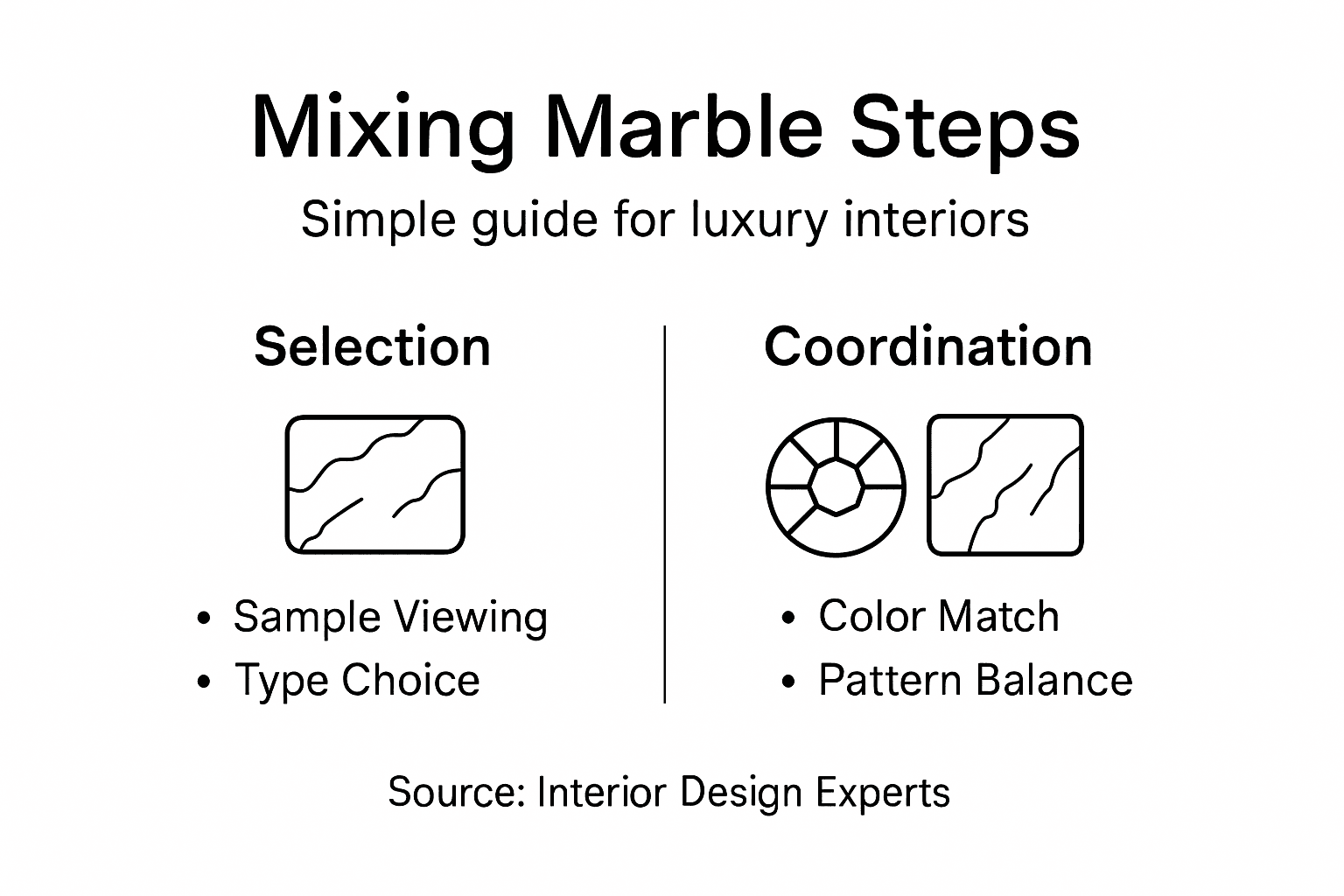
This summary highlights key marble coordination strategies for cohesive design:
| Strategy | Core Purpose | Design Effect |
|---|---|---|
| Monochromatic | Subtle depth | Elegant and understated |
| Contrasting | Visual drama | Bold focal points |
| Pattern Balancing | Textural harmony | Prevents visual clutter |
| Temperature Mixing | Tone variation | Dynamic spatial feel |
Masterful marble coordination is less about perfect matching and more about creating a nuanced visual dialogue.
Pro tip: Create a physical mood board with marble samples, paint swatches, and fabric textures to visualize how different elements will interact before making final selections.
Mastering marble integration requires strategic placement in areas that maximize both aesthetic appeal and functional elegance. Key interior zones offer unique marble application opportunities that can transform your living spaces.
Consider these primary areas for marble incorporation:
Each area requires a nuanced approach to marble selection. Kitchen marble demands durability and resistance to staining, making dense varieties like Calacatta ideal for high-traffic surfaces. Bathroom marble should prioritize moisture resistance, with polished or sealed surfaces preventing water absorption.
Successful marble integration is about finding the perfect balance between functionality and visual drama.
Pro tip: Select different marble grades for different areas—using premium, highly veined marble for statement zones and more uniform pieces for practical surfaces.
Finalizing your marble integration requires a meticulous review process to ensure seamless aesthetic cohesion. Creating perfect visual harmony demands deliberate design adjustments that elevate your space from good to extraordinary.
Implement these critical review strategies to refine your marble design:
Professional designers recommend multiple perspective checks. Step back and observe your marble integration from various angles and lighting conditions. Photograph your space to gain an objective view, which helps identify potential visual disruptors or areas requiring subtle adjustments.
True design mastery lies in the nuanced details that create a seemingly effortless visual experience.
Pro tip: Use neutral tone marble pieces as transitional elements to help bridge design variations and create smoother visual connections between different areas.
Transforming interiors with marble requires more than just choice it demands harmony between color palettes patterns and texture to craft stunning luxurious environments. If you find selecting the perfect marble types and coordinating colors challenging Living & Decoration – Marmorique offers a curated collection of natural stone decor that helps you seamlessly blend marble elegance into your home. From exquisite marble lamps to functional statement pieces every item is crafted to enhance your interior with timeless beauty and sophisticated style.
Experience the difference that high-quality natural marble can make in creating a balanced and luxurious atmosphere. Visit Marmorique now to explore premium options including specialized pieces for your bath at Marble Bathroom Essentials – Marmorique and artistic lighting at Marble Lamps – Marmorique. Start your journey towards flawless marble coordination today and turn your interior dreams into reality.
To assess your current interior elements, evaluate the architectural style, color palette, lighting conditions, and existing textures of your space. Take high-resolution photographs from different angles to help visualize how marble placement will interact with your current design.
When selecting marble types, consider color harmony, veining patterns, visual weight, and texture consistency. Obtain samples of different marbles and review them in your space under various lighting conditions to ensure they complement your existing design.
To coordinate colors and patterns, use tonal matching to select marbles that complement your existing color palette and balance intricate veining patterns. Create a physical mood board with marble samples alongside paint swatches to visualize how the elements interact before making your final selections.
Key areas for marble incorporation include kitchen surfaces, bathroom spaces, flooring in high-traffic areas, and decorative accents like fireplace surrounds. Prioritize durability in kitchens and moisture resistance in bathrooms to maximize functionality while enhancing aesthetic appeal.
To review your marble design, assess how marble tones align with existing colors, evaluate texture balance with surrounding materials, and consider how lighting conditions affect marble appearance. Step back and observe the integration from various angles and take photos to identify any areas needing adjustment.
Use premium, highly veined marble in statement areas for visual impact, while opting for more uniform pieces in practical surfaces to ensure durability and consistency. This approach helps create a cohesive look while accommodating different functional needs in each area.


