Your Cart (0)
Your cart is empty
Free express shipping

Drawer menu
Free express shipping

Every Luxury Interior Designer in Europe knows the quest for distinctive materials that combine history, artistry, and enduring sophistication. Travertine offers a rare union of geological intrigue and versatile beauty, with origins traced to mineral-rich springs and celebrated in Italian architecture. Its porous texture and elegant neutral tones create a foundation for both contemporary and classical design statements. Discover how embracing the natural variability of travertine transforms high-end residential spaces into unique, timeless works of art.
| Point | Details |
|---|---|
| Unique Formation | Travertine is formed through mineral-rich hot springs, resulting in distinctive colors and patterns that enhance interior design. |
| Varied Applications | Suitable for flooring, wall cladding, countertops, and decorative elements, travertine offers versatility in modern interiors. |
| Maintenance Requirements | Care involves using pH-neutral cleaners, regular sealing, and immediate spill management to maintain the stone’s integrity over time. |
| Cost Considerations | Pricing depends on origin, fabrication complexity, and installation factors, making careful selection crucial to avoid future issues. |
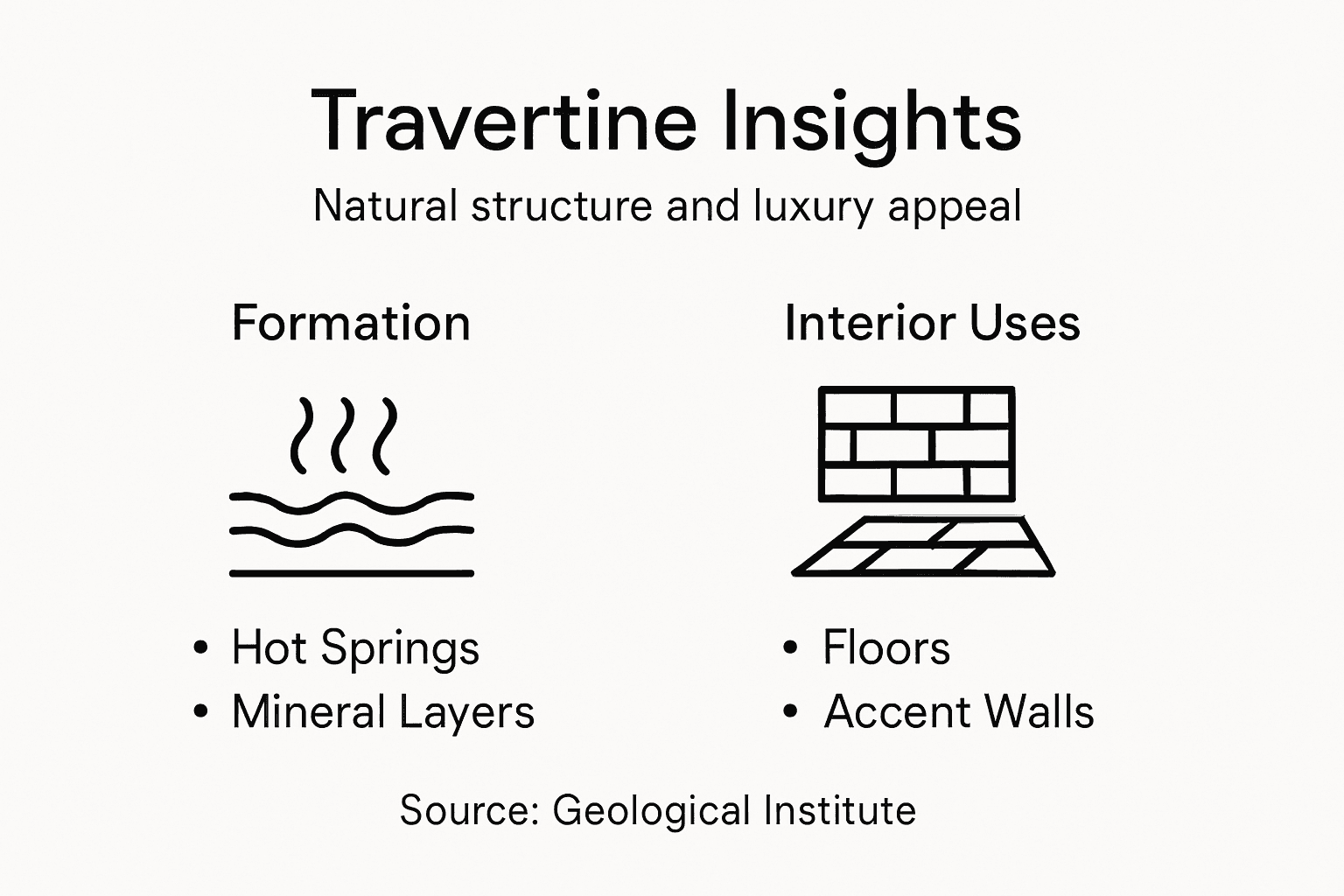
Travertine represents a fascinating natural stone with extraordinary characteristics that elevate interior design to new aesthetic heights. Formed through complex geological processes, this remarkable limestone variant emerges from mineral-rich hot springs, creating a material with unparalleled visual depth and historical significance.
At its core, travertine is a sedimentary rock composed primarily of calcium carbonate, distinguished by its unique formation process and distinctive appearance. Unlike standard limestone, travertine develops through rapid precipitation around mineral springs, resulting in a porous texture with intricate patterns that tell a geological story. The stone typically appears in sophisticated neutral tones - ranging from creamy whites to warm tans and rich rusty browns - making it an incredibly versatile design material.
The standout qualities of travertine include:
Geological research demonstrates that travertine’s formation involves complex interactions between mineral-saturated water and environmental conditions. The precipitation of calcium carbonate occurs through fascinating chemical processes, often influenced by thermophilic bacteria, which contribute to the stone’s unique structural characteristics.
Pro tip: When selecting travertine for interior design, always examine multiple samples to appreciate the stone’s natural variation and select pieces that harmonize with your specific design vision.
Travertine’s geological complexity translates into a stunning array of types and finishes that offer interior designers unprecedented creative possibilities. Travertine classifications reveal intricate morphological variations that emerge from unique environmental conditions, creating a material with extraordinary design potential.

Travertine Types encompass a fascinating range of geological formations, including:
Here’s a concise overview of common travertine types and their best interior uses:
| Travertine Type | Distinctive Pattern | Ideal Interior Application |
|---|---|---|
| Stromatolitic | Layered structural bands | Feature walls and accent panels |
| Oncoid | Spherical, rounded shapes | Bathroom basins and sculptures |
| Shrub | Branching, organic textures | Fireplace surrounds |
| Moss | Soft, moss-like surface | Spa areas and decorative inserts |
This summary helps match travertine type to your project needs.
When considering finishes, natural stone experts emphasize the critical role of surface treatment in determining both aesthetic appeal and functional performance. The primary finish types include:
Each finish offers unique characteristics that can dramatically transform a space. Polished travertine provides a sleek, sophisticated appearance, while honed surfaces offer a more natural, subdued elegance. Tumbled finishes introduce a sense of age and character, perfect for designers seeking a more organic, weathered aesthetic.
Pro tip: Always request multiple travertine samples with different finishes and observe how lighting and room context influence their visual characteristics.
Travertine’s geological complexity reveals remarkable visual characteristics that make it a premier choice for discerning interior designers seeking unique natural stone materials. The intricate interplay of texture, color, and veining creates a canvas of extraordinary aesthetic potential.
Texture Variations demonstrate the stone’s incredible diversity:
Color ranges in travertine are equally compelling. Thermal water processes influence color development, producing a sophisticated palette that includes:
The veining in travertine tells a geological story, with patterns emerging from mineral depositions and biological activities. These intricate lines create visual narratives that transform stone from a mere material into a living design element, with each slab offering a unique composition that cannot be precisely replicated.
Pro tip: Illuminate travertine samples with different light sources to fully appreciate their complex color variations and textural nuances.
Luxury interior design embraces travertine’s versatile aesthetic potential, transforming spaces with its timeless elegance and natural sophistication. The material’s extraordinary adaptability allows designers to create environments that seamlessly blend organic beauty with contemporary architectural vision.
Modern Travertine Applications span multiple design elements:
Advanced fabrication technologies enable precision and creativity in travertine design, allowing unprecedented customization. Designers can now achieve incredibly intricate cuts, unique surface treatments, and complex geometric forms that were previously impossible.
Contemporary luxury interiors leverage travertine’s inherent qualities to create immersive, tactile environments. Its natural variation ensures that each installation becomes a unique artistic statement, with warm tones and complex textures introducing depth and sophistication to high-end residential and commercial spaces.
Pro tip: Consider mixing travertine finishes within the same space to create subtle visual complexity and enhance architectural interest.
Travertine maintenance requires specialized care strategies that protect its natural beauty and preserve its long-term aesthetic value. Understanding the nuanced approach to maintaining this elegant stone is crucial for interior designers and homeowners alike.
Maintenance Considerations for travertine include:
A quick reference of maintenance steps and their impact on travertine longevity:
| Maintenance Step | Benefit | Frequency |
|---|---|---|
| pH-neutral cleaner usage | Prevents surface discoloration | Weekly or as needed |
| Immediate spill removal | Minimizes stain risk | As required |
| Annual sealing | Protects porous surfaces | Once per year |
| Avoiding acidic products | Maintains structural integrity | Always |
| Gentle cleaning tools | Reduces abrasion and scratching | Every cleaning session |
These practices help preserve travertine’s appearance over time.
Cost factors involve multiple complex considerations that extend beyond initial purchase price. Pricing depends on several critical elements:
Common pitfalls in travertine selection and maintenance can significantly compromise its performance. Designers must be vigilant about potential issues such as improper sealing, using harsh cleaning agents, and neglecting to blend slabs from multiple batches to ensure consistent coloration.
Pro tip: Always purchase 10-15% extra material during installation to account for potential cuts, breakage, and future replacement needs.
Discover how the natural beauty and timeless elegance of travertine can transform your living spaces into luxurious retreats. This article highlights the unique textures, colors, and finishes that make travertine a standout choice for sophisticated interior design. If you are seeking to bring warmth, durability, and a story into your home or commercial project, addressing challenges like selecting the right stone type or maintaining its pristine look starts with choosing exceptional products crafted from real travertine.
Explore the Travertine Collection – Marmorique to find artisanal stone pieces that embody these qualities. Each item emphasizes natural variation and expert craftsmanship so you can achieve the elegant and lasting ambiance described in the article.
Begin your journey toward interior excellence today by browsing our curated selections of travertine décor and furnishings. Bring home distinctive, high-quality stone products designed to withstand the tests of time and style. Visit Marmorique to select your premium travertine pieces and learn how to elevate your space with natural stone. For complementing your stone interiors, also check our Kitchen & Table and Decorative Trays – Marmorique categories for perfect finishing touches.
Travertine is a natural sedimentary rock formed from mineral-rich hot springs, distinguished by its porous texture and unique appearance. Its natural variability in color and texture, durability, and timeless elegance elevate it as a versatile design material in interior settings.
Common types of travertine include Stromatolitic, Oncoid, Shrub, and Moss. Stromatolitic is ideal for feature walls, Oncoid for bathroom basins, Shrub for fireplace surrounds, and Moss is best for spa areas and decorative inserts.
To maintain travertine surfaces, use pH-neutral cleaners, promptly remove spills to prevent staining, seal the stone annually, avoid acidic products, and use gentle cleaning tools to prevent damage.
Travertine finishes include polished, which offers a high-gloss appearance; honed, which provides a matte look for a more understated elegance; and tumbled, which has a rustic aesthetic with a slightly rough texture.


